
Multiplier AI Blog
Know How Data, AI, & Digital Marketing Can Help Pharma & Life Sciences
Keeping AI Agents Compliant with Healthcare Data Regulations: A 2026 Framework & Checklist
Two years ago, the compliance question about AI in healthcare commercial operations was theoretical. It is now a calendar. India's Digital Personal Data Protection Rules were notified on 14 November 2025, starting a phased clock that makes substantive data fiduciary obligations enforceable from 14 May 2027. The EU AI Act's Article 50 transparency obliga
AI for Patient Referral Tracking in Hospitals: Stop Referral Leakage, Grow the Network
Ask a hospital CEO where admissions come from and the answer is usually a mix of instinct and anecdote: “mostly referrals from doctors we know.” Ask which doctors, how many patients each sent last quarter, how many of those patients actually arrived, and how many were quietly lost to a competitor — and the room goes quiet.
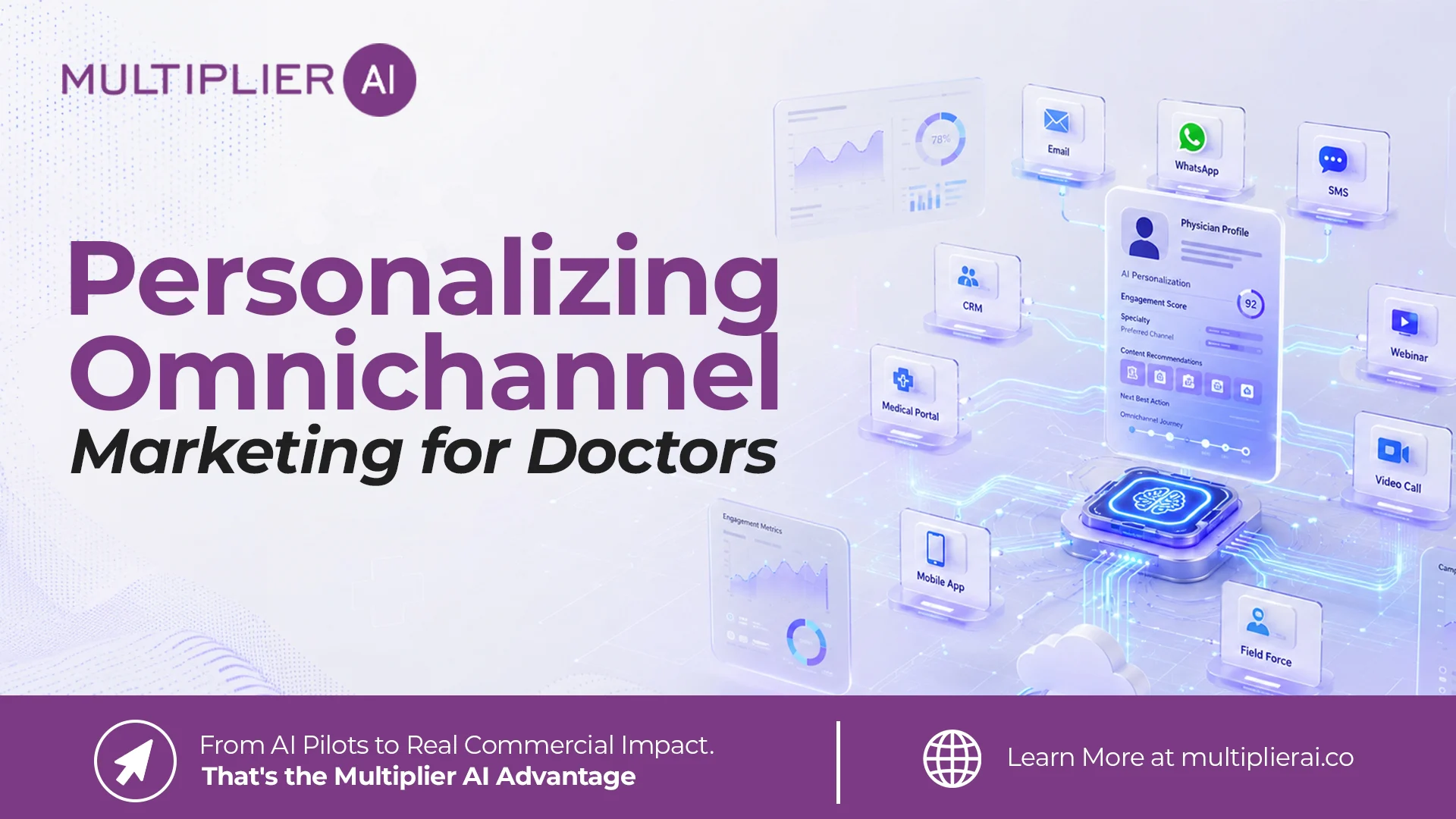
Personalizing Omnichannel Marketing for Doctors: The AI Playbook for Pharma Brands
Doctors receive the same brand email as five hundred colleagues, a WhatsApp forward written for nobody in particular, and a rep visit scripted before anyone looked at their history. Then brand teams wonder why engagement rates fall every quarter.
Doctor Data Validation & Enrichment with AI: How Pharma Companies Automate HCP Data Quality
Doctor data validation is the process of verifying that every record in an HCP database — name, speciality, contact details, affiliation, registration — is accurate and current. HCP data enrichment then adds missing attributes such as prescribing behaviour, digital preferences and influence signals. Pharma companies automate both with AI agents that continuously cross-check records against mult
Sales Performance Management in Pharma: The Complete Guide
Sales performance management (SPM) is the set of processes and tools pharma companies use to plan, manage, and improve field-force performance — covering goal and quota setting, territory alignment, incentive compensation, performance analytics, and coaching. Done well, SPM connects strategy to the doctor-level actions that actually drive prescriptions.
Predictive Analytics Models in Pharma: From Data to Next Best Action
Predictive analytics is the practice of using historical data, statistics, and machine learning to forecast future outcomes. In pharma, predictive analytics models estimate things like which HCPs are most likely to adopt a brand, which patients are at risk of dropping therapy, and which channel a doctor will respond to next — so commercial teams can act before the moment passes, not after.
Patient Engagement in Pharma: The AI-Powered Playbook for Patient Support Programs
Patient engagement in pharma means helping patients start, stay on, and succeed with their treatment — through education, reminders, support, and a better experience at every step. The problem it solves is huge: roughly half of patients with chronic conditions do not take their medicines as prescribed.
Private LLMs for Pharma: Guide to Secure, Compliant GenAI
A private LLM is a large language model that runs inside your own controlled environment, so your data never leaves your boundary to a third-party service. For pharma, that matters because the data is sensitive — doctor and patient records, trial results, and proprietary content — and the rules are strict.
UCPMP 2024 Explained: The Compliance Guide for Pharma Marketing Teams
UCPMP 2024 is India's Uniform Code for Pharmaceutical Marketing Practices — the ethical rulebook from the Department of Pharmaceuticals that controls how pharma and medical device companies promote their products to doctors.
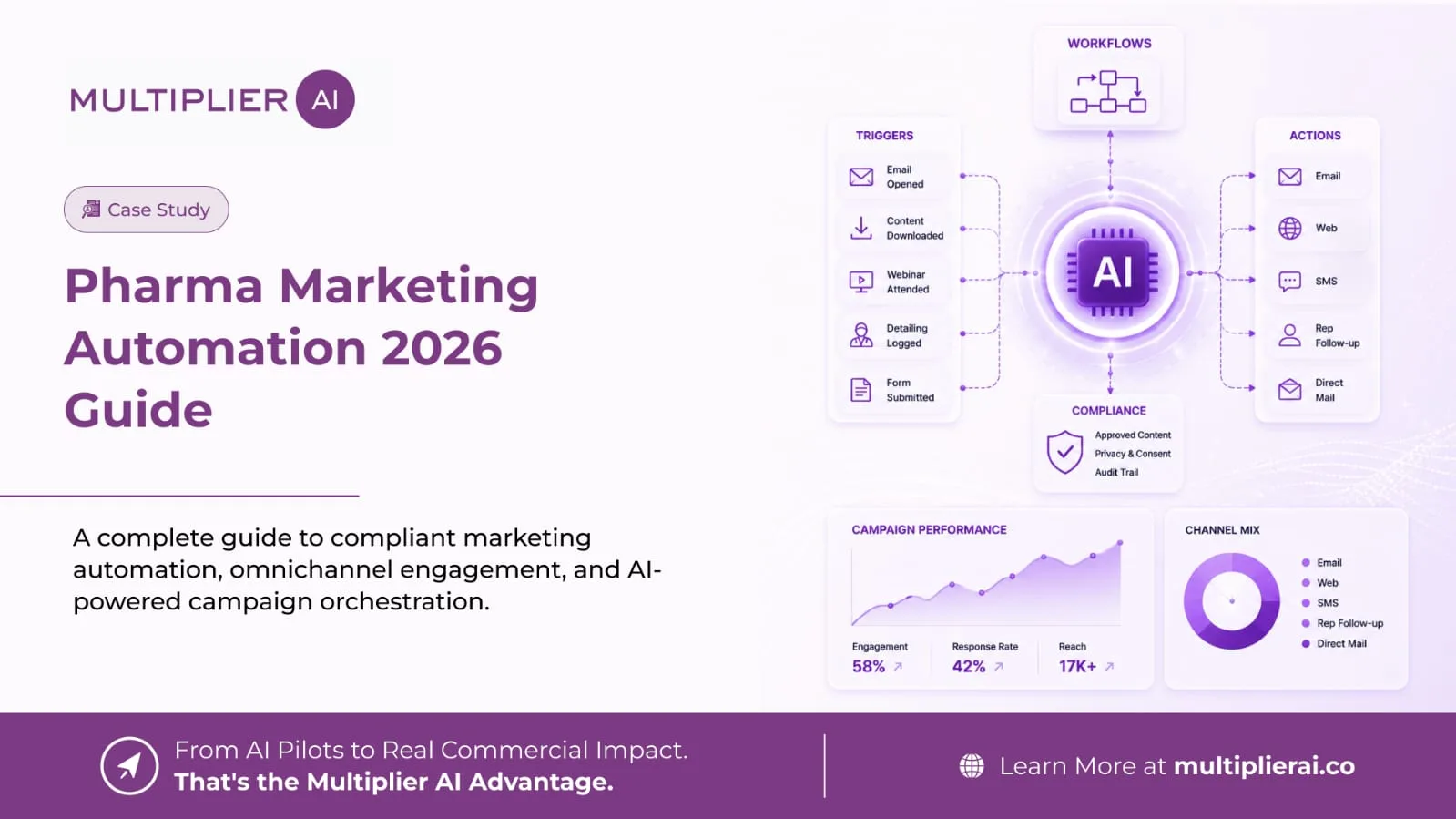
Pharma Marketing Automation: Workflows, Triggers and AI (2026 Guide)
Pharma marketing automation uses software to run marketing tasks, campaigns, and journeys automatically — triggered by what a doctor or patient does, and kept compliant at every step.
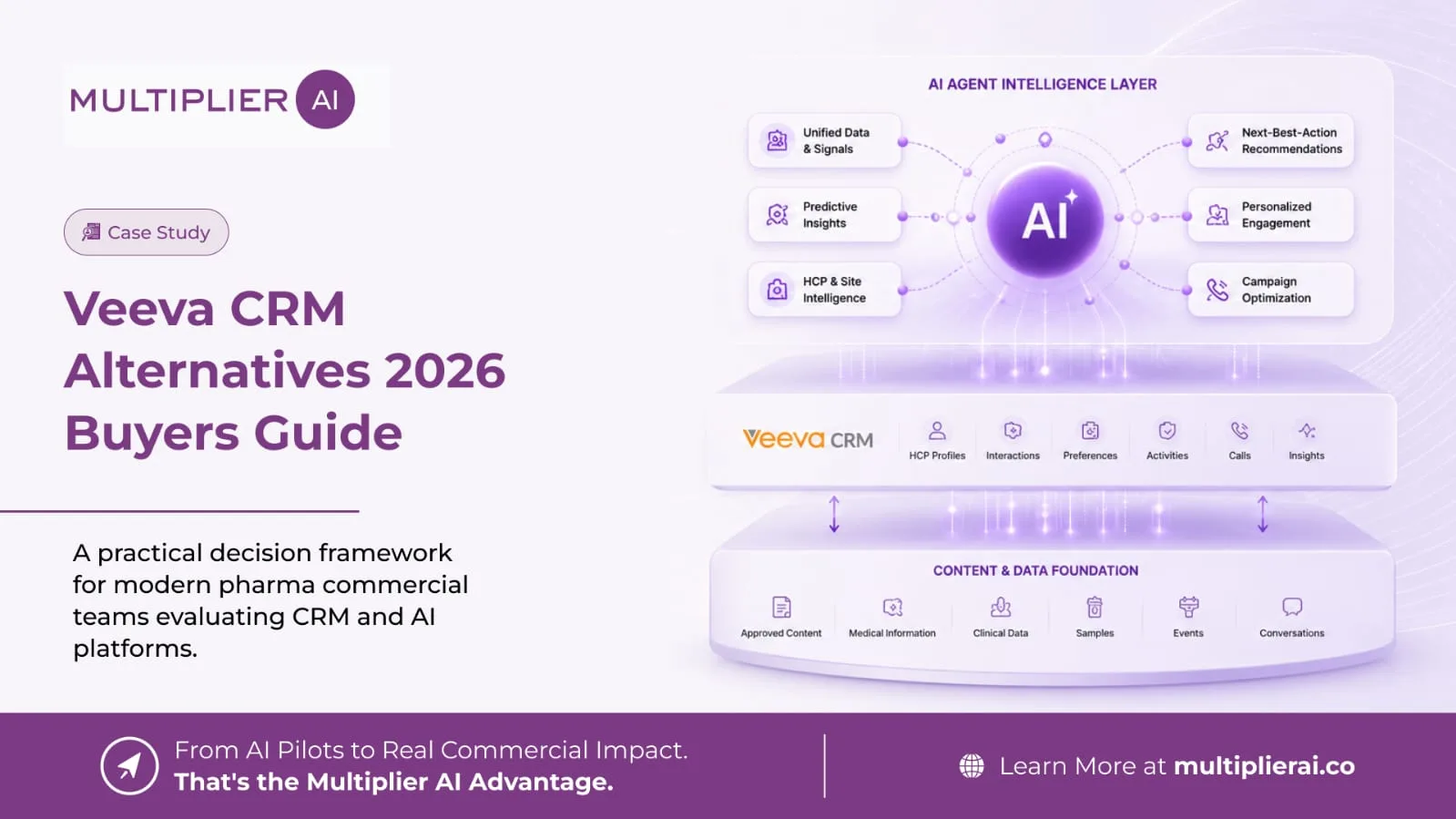
Veeva Alternatives for Pharma in 2026: When to Complement, When to Switch, and How an AI Layer Changes the Question
Veeva alternatives is one of the most searched vendor comparison terms in pharma commercial technology, and it is usually searched for the wrong reason. When a pharma commercial leader types that phrase, the problem is rarely Veeva itself.
How GenAI Creates Personalized Medical Content for 10,000 HCPs at Once
For years, pharma companies have understood the importance of personalized communication. The idea is simple: doctors respond better when content reflects their interests, their patients, and their clinical context. Relevance drives engagement, and engagement drives outcomes.