
Multiplier AI Blog
Know How Data, AI, & Digital Marketing Can Help Pharma & Life Sciences

Aktana Alternatives: Next Best Action Platforms Compared (2026)
Search volume for “Aktana alternatives” rose sharply after 7 January 2026, when PharmaForceIQ announced it had acquired Aktana in an asset acquisition with no financial terms disclosed. That timing tells you what most people typing the phrase are actually asking. They are not dissatisfied with the product — Aktana has been a recognised leader in this category for a decade, was named a Leader an
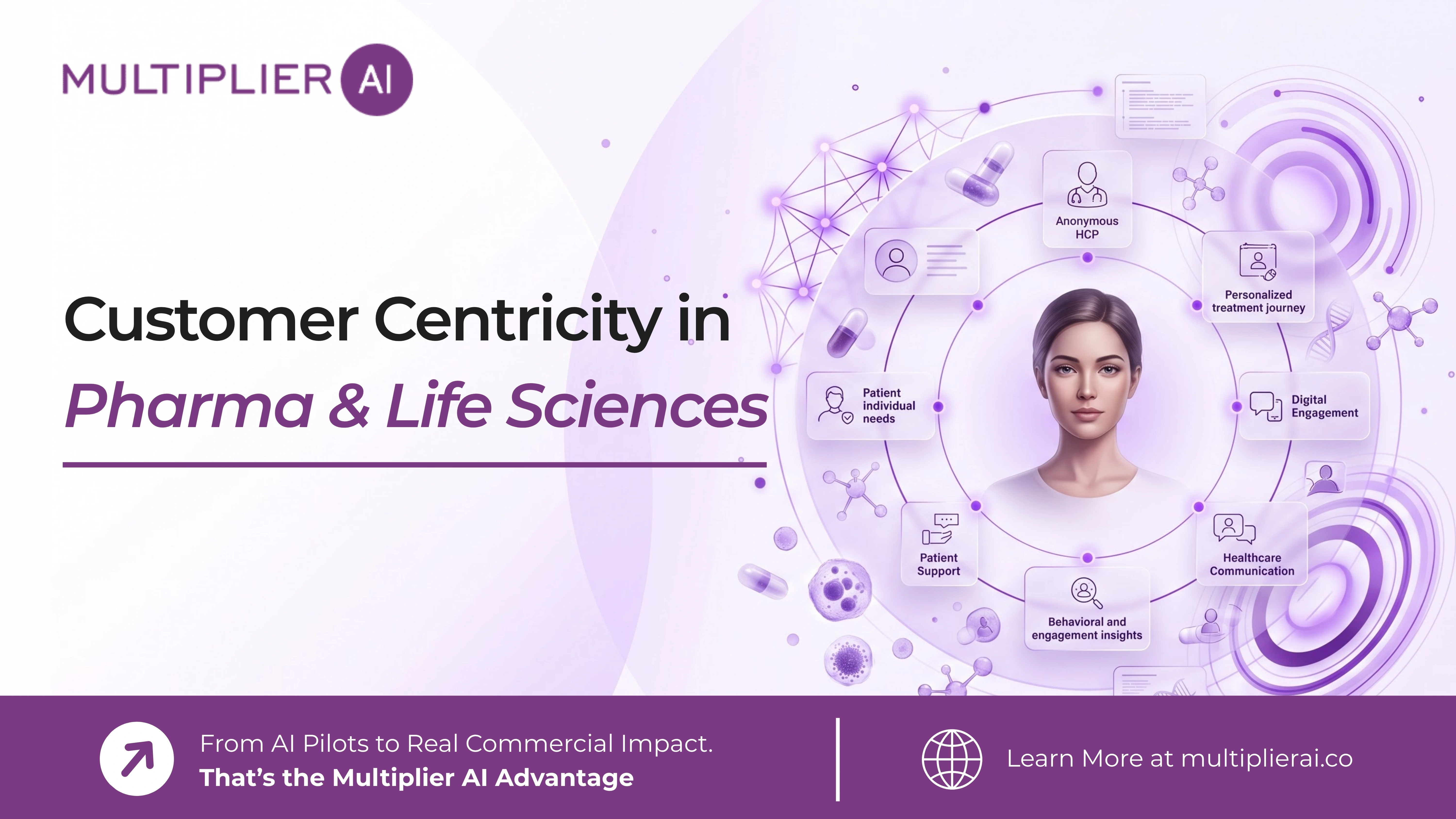
Customer Centricity in Pharma & Life Sciences
In March 2025 Deloitte published a finding that ought to have ended the debate about whether pharmaceutical companies are customer-centric. Eighty-two per cent of life sciences executives said they were satisfied with their organisation's customer engagement strategy. Twenty-eight per cent of healthcare professionals said those strategies met their needs. Both groups were describing the same ac

Territory Alignment in Pharma: A Practical Framework
Territory alignment is usually described as a mapping problem: draw boundaries so that each representative has a fair share of the work and a fair share of the opportunity. That description is accurate and it is why so many alignments fail. Balance is the easiest property to measure and the easiest to optimise, so it becomes the objective — while the property that actually generates revenue, th

Field Force Effectiveness & Sales Force Sizing in Pharma
Most field force effectiveness programmes measure the wrong thing, and most sales force sizing exercises answer a question that stopped being the right one somewhere around 2023. Both problems have the same root cause: the industry built its measurement and sizing logic in an era when a representative who made more calls reached more physicians, and reaching more physicians produced more prescr
Digital Marketing Analytics for Pharma Brands: From Dashboards to Decisions
Digital marketing analytics is the practice of collecting, connecting and interpreting data from every digital channel — email, web, paid media, events, portals and rep-triggered content — to measure what is working and decide what to do next. In pharma, it means linking HCP-level engagement signals to prescribing behaviour, so marketing spend and field effort can be directed at the physicians
TRx, NRx & NBRx Explained: The Pharma Prescription Metrics Glossary
If you work anywhere near pharma sales or analytics, three acronyms follow you everywhere: TRx, NRx, and NBRx. They look similar, they're often confused, and getting them wrong quietly distorts every sales report, incentive plan, and market-share slide built on top of them. This glossary explains each metric in plain language, shows exactly how they differ, and covers how to use them together t
-in-Pharma-Turning-Real-World-Data-into-Commercial-Advantage.webp)
Real-World Evidence (RWE) in Pharma: Turning Real-World Data into Commercial Advantage
Clinical trials tell you how a therapy performs under controlled conditions. Real-world evidence tells you how it performs in the messy reality of everyday practice — with real patients, real adherence, and real outcomes. For pharma commercial teams, that difference is where a growing share of competitive advantage now lives.

Keeping AI Agents Compliant with Healthcare Data Regulations: A 2026 Framework & Checklist
Two years ago, the compliance question about AI in healthcare commercial operations was theoretical. It is now a calendar. India's Digital Personal Data Protection Rules were notified on 14 November 2025, starting a phased clock that makes substantive data fiduciary obligations enforceable from 14 May 2027. The EU AI Act's Article 50 transparency obliga

AI for Patient Referral Tracking in Hospitals: Stop Referral Leakage, Grow the Network
Ask a hospital CEO where admissions come from and the answer is usually a mix of instinct and anecdote: “mostly referrals from doctors we know.” Ask which doctors, how many patients each sent last quarter, how many of those patients actually arrived, and how many were quietly lost to a competitor — and the room goes quiet.

Doctor Data Validation & Enrichment with AI: How Pharma Companies Automate HCP Data Quality
Doctor data validation is the process of verifying that every record in an HCP database — name, speciality, contact details, affiliation, registration — is accurate and current. HCP data enrichment then adds missing attributes such as prescribing behaviour, digital preferences and influence signals. Pharma companies automate both with AI agents that continuously cross-check records against mult
Sales Performance Management in Pharma: The Complete Guide
Sales performance management (SPM) is the set of processes and tools pharma companies use to plan, manage, and improve field-force performance — covering goal and quota setting, territory alignment, incentive compensation, performance analytics, and coaching. Done well, SPM connects strategy to the doctor-level actions that actually drive prescriptions.
Predictive Analytics Models in Pharma: From Data to Next Best Action
Predictive analytics is the practice of using historical data, statistics, and machine learning to forecast future outcomes. In pharma, predictive analytics models estimate things like which HCPs are most likely to adopt a brand, which patients are at risk of dropping therapy, and which channel a doctor will respond to next — so commercial teams can act before the moment passes, not after.