Pharma Omnichannel Marketing in 2026: Trends, AI, and the Shift to HCP Journeys
What is Omnichannel marketing in pharma?
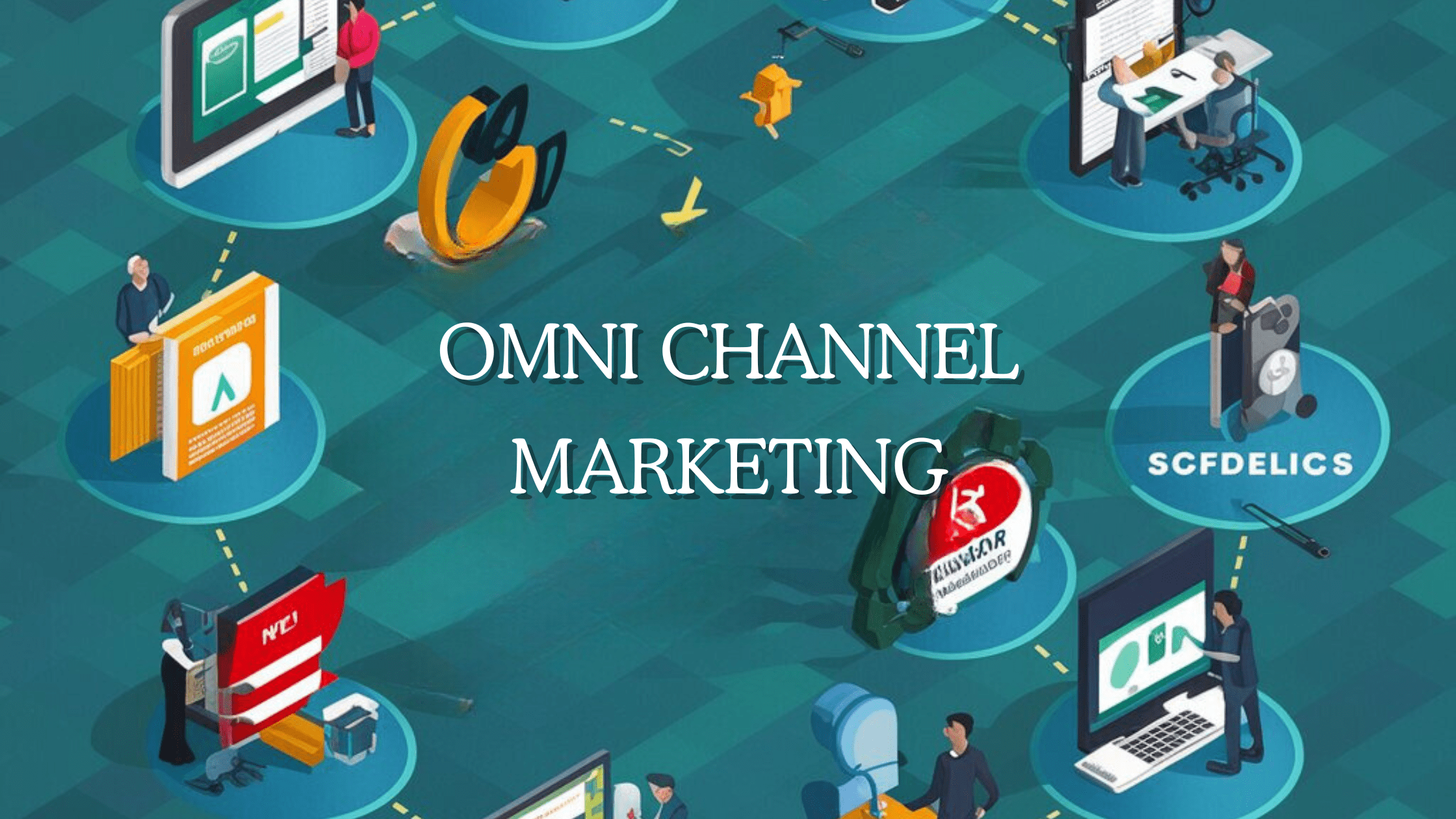
Omnichannel marketing in pharma is a strategy that connects every touchpoint — email, web, rep visits, WhatsApp, webinars, and chatbots — into one continuous, personalized conversation with each HCP, instead of running separate campaigns on separate channels. In 2026, the defining shift is from coordinating channels by hand to using AI and next-best-action engines to orchestrate the right message, in the right channel, at the right moment, automatically and within compliance. Done well, it lifts HCP engagement by 30-40% and sales by 4-10%.
What Omnichannel Marketing Means in Pharma (and What Changed by 2026)
Omnichannel marketing is a strategy that makes sure the content you put out reaches each HCP in the channel they prefer, personalized to what they need. That part has not changed. What changed by 2026 is how it is done.
For years, 'omnichannel' in practice meant multichannel: the same campaign pushed across email, web, and reps, loosely coordinated by hand. HCPs noticed. They are pitched dozens of times a day, and disconnected outreach just adds to the noise. In 2026, true omnichannel means orchestrating one continuous conversation that follows the HCP across channels, remembers context, and adapts in real time. The engine behind that shift is AI — and increasingly, agentic AI that decides the next best action on its own, inside compliance guardrails. The difference between multichannel and omnichannel is simple: multichannel is channel-centric, omnichannel is HCP-centric.
Trend 1: Hyper-Personalization of Content and Experience
HCPs are in high demand, and the competition for their attention is intense. Every brand wants to be the one '9 out of 10 doctors recommend.' Because HCPs receive multiple pitches, product messages, and ad campaigns every day, the only way to earn attention is relevance.
In 2026, personalization goes far beyond segmenting doctors by specialty or prescribing volume. It means tailoring the channel (email, WhatsApp, webinar, rep visit), the content format (short video, case summary, scientific paper), and the timing to each individual HCP's behavior and preferences. Omnichannel makes this possible because it integrates channels through shared touchpoints, so the HCP gets a seamless, customized experience instead of a fragmented one. The same insight into each HCP's preferences is also what tells you which strategy and channel will actually work. This is where AI-driven HCP segmentation moves from a static list to a living understanding of each doctor.
Trend 2: AI and Real-Time Data Orchestration
Meeting HCP needs quickly will never go out of style — which is exactly why personalization, campaign design, and channel selection have to happen fast and at scale. No team can do that by hand.
This is where AI-driven HCP intelligence comes in. A platform like Multiplier AI HCP IQ gathers HCP data from many sources — social media, Sermo, public records, and engagement history — unifies and segments it, and turns it into insight. Those insights tell marketers what content to create for a given audience, how to deliver it, and which channel to use. The content and strategy then pass an automated compliance check against global and local regulations before anything goes out. Because all of this is automated and updated in real time, marketers move faster and waste less.
The catch: the quality of every insight depends on the quality of the underlying HCP data. Garbage in, garbage out — which is why a unified data layer matters more than any single model, and why the hidden cost of bad doctor data shows up directly in weak campaigns.
Trend 3: Agentic AI and Next-Best-Action Orchestration
This is the trend that defines 2026. For years, omnichannel ran on static, backward-looking segmentation: build a list, pick a cadence, push the campaign. Agentic AI changes the model.
Instead of a fixed plan, an AI agent acts as the conductor — reading engagement signals as they happen, identifying patterns, and orchestrating the next best action in real time: the best message, channel, content, and moment for each HCP. If a doctor opens a case study on a portal, the system can trigger a relevant follow-up on their preferred channel automatically. This is the same shift that separates agentic AI from traditional automation — and it is why static HCP lists are now failing pharma.
The rule that keeps this safe in pharma is simple: agents propose, humans decide. The AI recommends the next action; the rep, marketer, or MSL stays accountable, especially where compliance is involved. Next-best-action is now described as the dominant initiative across pharma commercial teams, and it is what separates true 2026 omnichannel from yesterday's multichannel.
Trend 4: AI Chatbots, AR/VR, and Emerging Channels
AI-powered omnichannel chatbots answer common HCP questions instantly and carry the conversation across channels without losing context. Every interaction also becomes a signal that improves the next one and feeds the wider engagement strategy.
Beyond chat, immersive technologies are moving from novelty to utility. Augmented reality (AR) and virtual reality (VR) are becoming practical ways to explain a drug's mechanism of action, present complex clinical data, and train HCPs — turning dense information into something a busy clinician can absorb in minutes. These channels are not replacements for email or reps; they are new touchpoints in the same connected journey, and the omnichannel system decides when each one is the right tool for a given HCP.
Trend 5: Compliance-by-Design in Every Channel
The more channels and the more automation, the bigger the compliance surface. In 2026, regulators expect stricter transparency at the same time HCPs and patients expect more personalization — two pressures pulling in opposite directions.
The only way to hold both is to build compliance into the system, not bolt it on at the end. That means consent and data-use rules (DPDP, GDPR, HIPAA) enforced at the data layer, MLR review built into content workflows, and an audit trail for what every AI agent recommended and why. Compliance-by-design is what lets a pharma brand personalize aggressively and still pass review on the first pass — the same principle behind DPDP-compliant HCP marketing.
“Omnichannel in 2026 isn't about being on every channel. It's about being relevant on the one channel that HCP actually wants, at the moment they want it — and letting AI do that orchestration while your team stays in control.”
How to Build a 2026 Pharma Omnichannel Program: 6 Steps
Build in this order. Skipping step 1 is why most omnichannel programs stall.
- Unify your HCP data. Bring CRM, digital, prescribing, and external signals into one identity-resolved view. This is the foundation everything else stands on.
- Map channel preferences per HCP. Learn which channels each HCP actually uses and when — don't assume.
- Build the content and compliance engine. Create modular content and run it through automated MLR and regulatory checks before launch.
- Add next-best-action orchestration. Let AI recommend the message, channel, and timing for each HCP from real-time signals.
- Keep humans in the loop. Agents propose, people decide — especially on compliance-sensitive actions.
- Measure, learn, and adapt. Feed every outcome back so the system improves and spend shifts to what works.
Start with data, end with a feedback loop. The technology is ready; the discipline is what wins.
Example: a mid-size pharma brand team was running email, rep visits, and a webinar series as three separate campaigns. The same HCPs got overlapping, sometimes contradictory outreach, engagement was flat, and content fatigue was rising. They rebuilt around a single connected journey: one unified HCP data view, channel preferences mapped per doctor, and an AI next-best-action layer deciding what to send, where, and when. Reps saw the AI's recommendation inside their existing workflow and stayed in control of the final call. Within two quarters, duplicate outreach dropped sharply, the webinar invites started landing with the right HCPs at the right time, and engagement climbed without adding headcount. Nothing about the content was revolutionary. The orchestration was.
Key Terms: Omnichannel Pharma Vocabulary
- Omnichannel marketing — one connected, personalized conversation with an HCP across all channels.
- Multichannel — being present on many channels, often with the same message, coordinated by hand.
- HCP — healthcare professional; the audience for this engagement.
- Next best action (NBA) — the single most relevant next step for an HCP, recommended by AI from live signals.
- Agentic AI — AI that acts as a conductor, deciding and orchestrating actions in real time.
- Hyper-personalization — tailoring channel, content, format, and timing to each individual HCP.
- Orchestration — coordinating all channels and decisions into one coherent journey.
- Compliance-by-design — building DPDP/GDPR/HIPAA/MLR checks into every channel, not at the end.
- Touchpoint — any single point of contact with an HCP across the journey.
- Unified HCP data — one identity-resolved view of each HCP feeding every channel.
Conclusion
Omnichannel marketing in 2026 is no longer about being everywhere. It is about being relevant — reaching each HCP on the channel they prefer, with the content they need, at the moment they will act, while staying inside compliance. The trends that matter this year all point the same way: hyper-personalization, AI and real-time data, agentic next-best-action, chatbots and immersive channels, and compliance built into every step. And every one of them rests on a single foundation — clean, unified, identity-resolved HCP data.
Get that right, add AI orchestration on top, keep your team in the loop, and omnichannel stops being a buzzword and starts driving real engagement and sales. For the ROI math behind it, see our breakdown of AI ROI in pharma; for the system that powers it, see our guide to pharma AI architecture.
Power Your Omnichannel With Multiplier AI HCP IQ
Omnichannel only works when it runs on accurate, unified HCP intelligence. Multiplier AI HCP IQ gathers HCP data from social, Sermo, public records, and engagement history, resolves it into one clean view, segments it, and turns it into the insight that drives personalized, compliant, next-best-action engagement across every channel. It runs on the GenAI Doctor Data Platform with 99% identity-resolved doctor data, with compliance checks built in for DPDP, GDPR, HIPAA, and MLR. Stop blasting channels. Start orchestrating HCP journeys.
Frequently Asked Questions For Pharma Omnichannel Marketing in 2026
Omnichannel marketing in pharma connects every touchpoint — email, web, rep visits, WhatsApp, webinars, and chatbots — into one continuous, personalized conversation with each HCP, instead of running separate campaigns on separate channels. It uses shared data and AI so the same context follows the HCP across channels, and the right message reaches them in the channel they prefer at the moment they are most likely to act.
The main 2026 trends are hyper-personalization of channel, content, and timing per HCP; AI and real-time data orchestration; agentic AI with next-best-action; AI chatbots; AR and VR for immersive education; compliance-by-design across every channel; and a unified HCP data foundation underpinning all of it. The defining shift is from manual channel coordination to AI-orchestrated, self-adjusting HCP journeys.
Multichannel means being present on many channels, often with the same message pushed across each one and coordinated by hand. Omnichannel means one connected conversation that follows the HCP across channels, remembers context, and adapts in real time. Multichannel is channel-centric; omnichannel is HCP-centric. In 2026, omnichannel uses unified data and AI to decide the next best action, while multichannel just schedules campaigns.
Next best action is an AI-driven approach that recommends the single most relevant next step for each HCP — the best message, channel, content, and timing — based on real-time signals rather than a fixed plan. In pharma, NBA programs have been shown to lift HCP engagement by 30-40% and sales by 4-10%. The guiding rule is that agents propose and humans decide, so reps and marketers stay accountable, especially on compliance.
AI unifies data from CRM, digital, prescribing, and external sources, segments it, and learns each HCP's channel preferences, content formats, clinical interests, and optimal timing. It then recommends or triggers the most relevant content on the channel that HCP prefers, at the moment they are most likely to engage, refining the strategy continuously as new behavioral signals arrive.
There is no single answer, which is the point: HCP channel preference is individual and shifting. Common channels in 2026 include email, secure messaging such as WhatsApp, peer portals, webinars and virtual events, rep visits, and increasingly AI chatbots and immersive AR/VR. The role of omnichannel is to learn each HCP's preferred mix rather than assume it.
AI chatbots answer common HCP questions instantly, carry context across channels, and turn every interaction into a signal that improves future engagement. AR and VR make complex information easier to absorb — visualizing a drug's mechanism of action, presenting clinical data, or training HCPs. In an omnichannel program these are additional touchpoints in one connected journey, with the orchestration layer deciding when each is the right tool for a given HCP.
Build compliance into the system rather than bolting it on at the end. Enforce consent and data-use rules (DPDP, GDPR, HIPAA) at the data layer, run content through automated MLR and regulatory checks before launch, and keep an audit trail of what every AI agent recommended and why. Compliance-by-design lets a brand personalize across many channels and still pass review on the first pass.
Yes. When done well, omnichannel with AI-driven next-best-action has been shown to lift HCP engagement by 30-40% and sales by 4-10%, mainly by delivering more relevant messages in preferred channels and cutting duplicate outreach. The gains depend on clean unified data, real personalization, and a feedback loop. Without those, adding channels just adds noise and content fatigue.
Start by unifying your HCP data into one identity-resolved view, because everything else depends on it. Then map each HCP's channel preferences, build a content engine with automated compliance checks, add AI next-best-action orchestration, keep humans in the loop on decisions, and close the loop by measuring outcomes and adapting. Beginning with channels or tools before fixing the data foundation is the most common reason omnichannel programs stall.
Let's Discuss Your Requirements