
Multiplier AI Blog
Know How Data, AI, & Digital Marketing Can Help Pharma & Life Sciences
From E-E-A-T to AI Citability: Rebuilding the Medical Review Workflow
A large health publisher spends somewhere between a few hundred and a few thousand dollars on every page that passes through medical review. A clinician reads the draft, checks it against current guidance, queries the claims that are not supported, and signs off. That work is real, it is the right thing to do for readers, and in regulated pharmaceutical communications it is not optional
The Health Publisher's Prompt Map
A peer reviewed study of 617,827 health conversations found that about 41% were health information and education and that roughly one in seven symptom questions was asked on behalf of somebody else. That second number is a persona most editorial plans do not have, and it is the most commercially useful finding in the dataset.

The ROI of AI in Pharma Commercial Operations
Almost every ROI figure quoted for pharma commercial AI is a projection, an expectation or an unattributed number that has been copied between articles until it looked like evidence. This page traces each one to its origin, separates what has been measured from what has been estimated, and builds a payback model from the figures that survive.
IQVIA OneKey Alternatives: HCP Data Options Compared (2026)
Most articles about IQVIA OneKey alternatives begin by understating OneKey. That is a mistake, and it is the reason so much of this content fails to help anyone. On IQVIA's own published figures, OneKey maintains roughly 25 million healthcare professionals and 6 million healthcare organisations across 118 countries, carries between 250 and 1,000 attributes per professional, processes around 17.
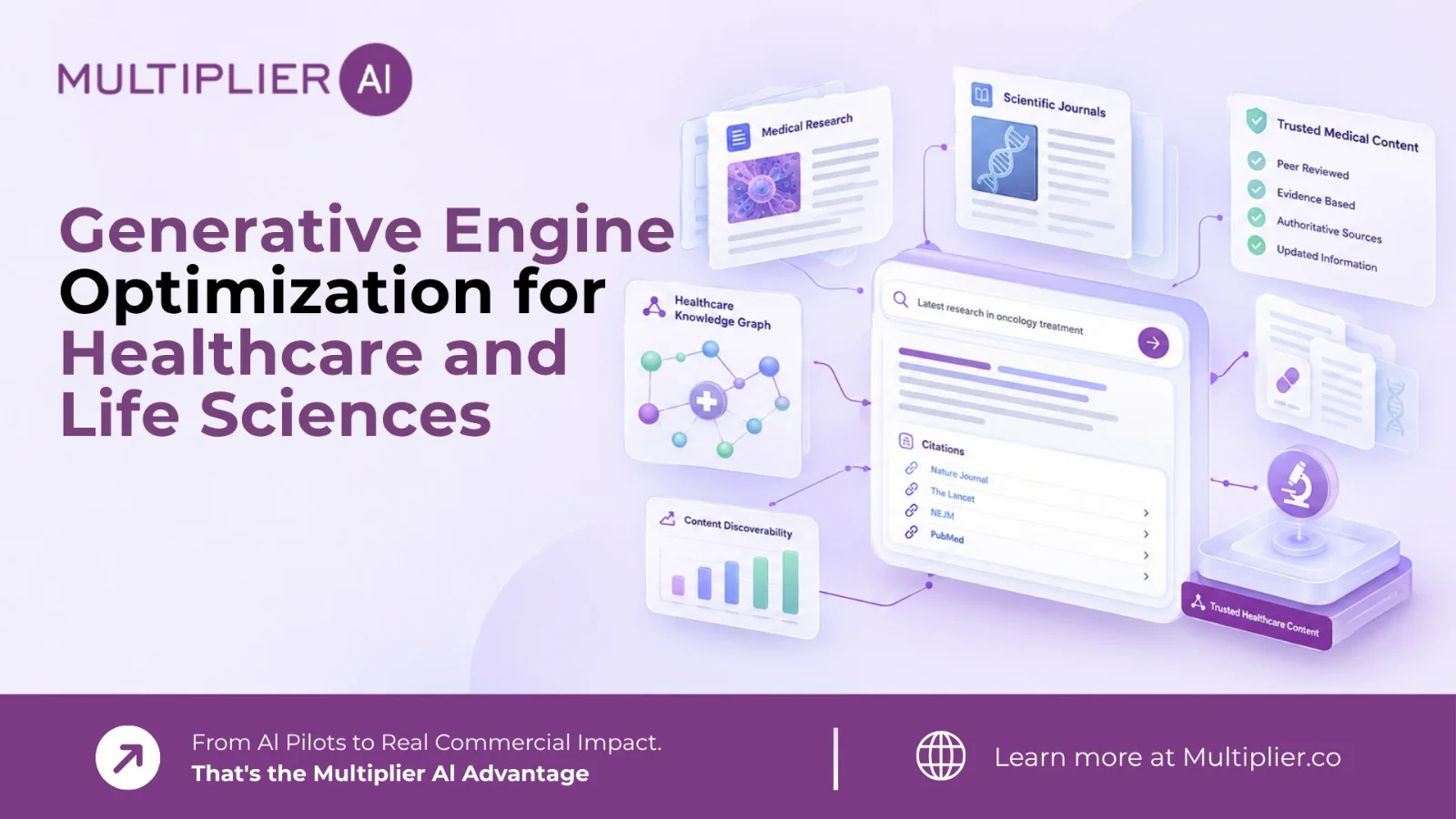
Generative Engine Optimization for Healthcare and Life Sciences
Every measurement system healthcare marketing uses was built for a world of links. A search result has a rank. An impression is logged. A click arrives with a referrer attached, and from that referrer you can build attribution, calculate cost per acquisition, and tell a brand team which asset did the work. A generative answer has none of those things. There is no rank, because
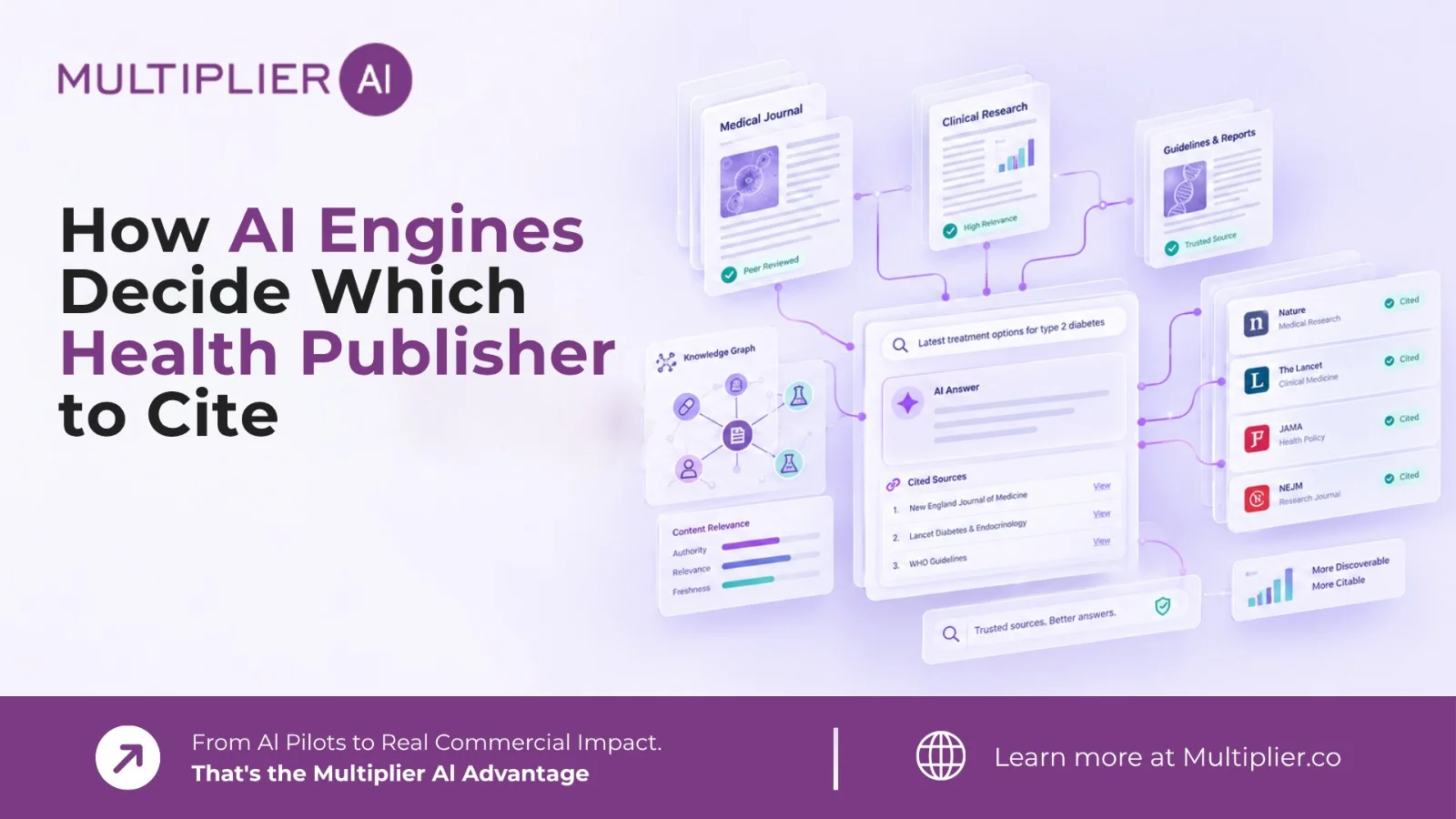
How AI Engines Decide Which Health Publisher to Cite
Ask any search professional which sources AI engines trust for health content and you will get a hierarchy. Government bodies at the top, then clinical guidelines and specialist societies, then peer reviewed literature, then academic medical centres, then publishers, then brands, then forums at the bottom. It is a tidy answer, it matches how clinicians think about evidence, and we publi

GEO for Medical Publishers
Health publishing spent fifteen years building a particular machine. You wrote comprehensive, medically reviewed content about every condition a person might search for, you ranked for it, and advertisers paid to reach the people who arrived. The machine worked well enough to support several businesses of real scale, and the thing that made it work was that a person with a symp

Measuring AI Visibility Across a 50,000 Page Health Content Library
Measuring AI visibility across a large content library is a sampling problem, and the single most expensive misconception is that the sample has to scale with the library. It does not. The statistical precision of an estimate depends on the sample size and the rate being estimated, not on the size of the population it is drawn from, which means 600 well constructed prom
Automating Medical Rep Call Reporting with AI
Every SFA vendor sells voice-to-CRM on the same claim: speaking is faster than typing. None of them publishes an accuracy number. The published research does — and it explains why the obvious architecture is the wrong one for an Indian field force.

Build vs Buy: The Pharma Commercial AI Stack
Most build-versus-buy guidance for pharma AI is priced in US dollars, which quietly decides the answer before the reader has started. This guide rebuilds the comparison at Indian salaries, audits the figures everyone is quoting, and shows why this is five decisions rather than one.

AI Territory Design and Route Optimisation for Pharma
Territory design is usually discussed as a map exercise and is really an arithmetic one. How to build the workload index and the potential map that the alignment runs on, why Indian beat-planning benchmarks come from FMCG and break in pharma, and which productivity claims survive checking.

How to Increase Prescription Share of Voice with AI
Share of voice and share of prescriptions are two different things, and conflating them is the most common error in this subject. Share of voice is your share of the total promotional and scientific communication a doctor receives. Share of prescriptions is your share of what they actually write. The framework linking them — excess share of voice, where SOV min