
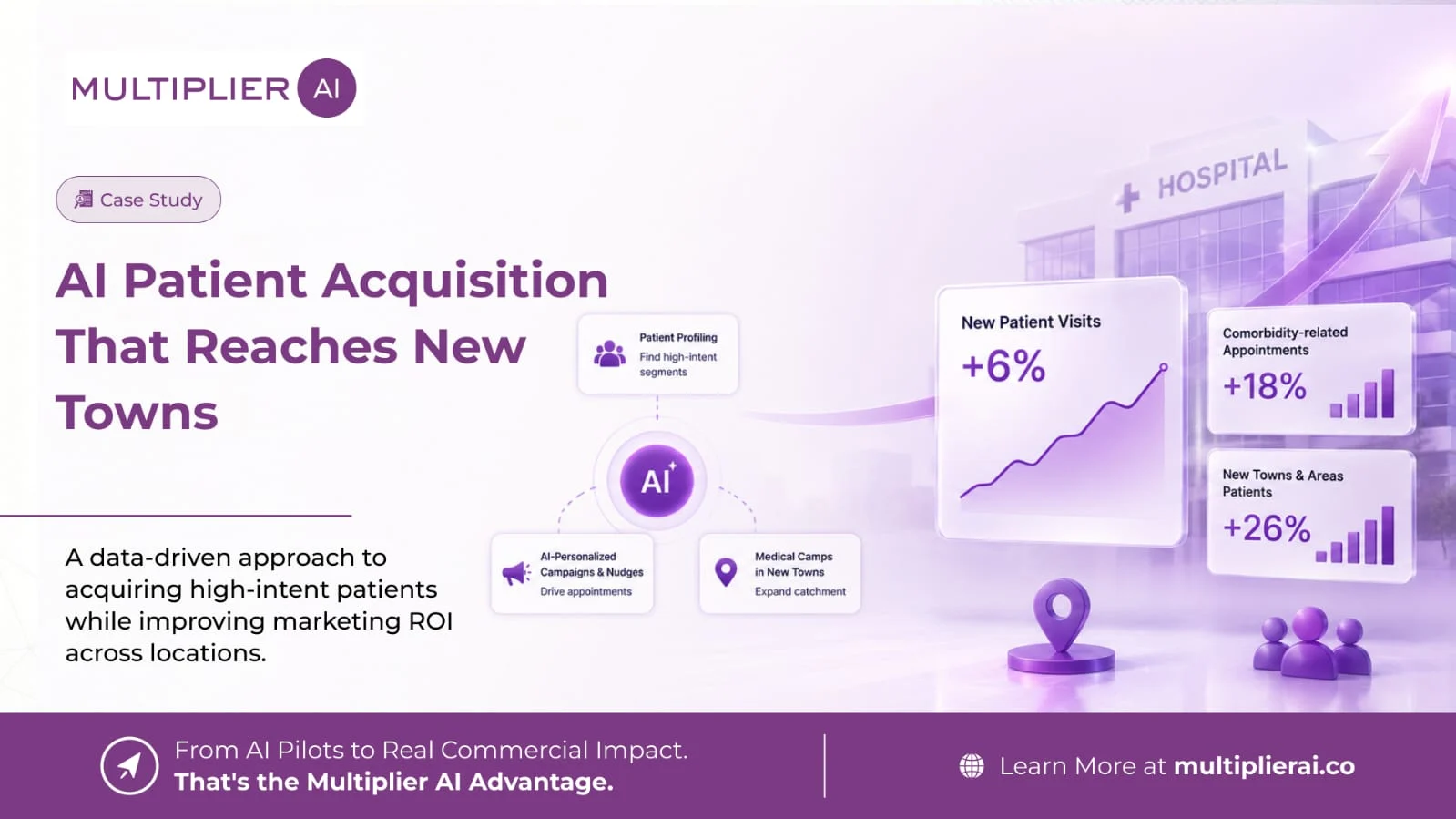
A hospital was losing ground on new-patient growth. Acquisition costs were climbing — a new patient can cost $247 to $1,435 to acquire versus a fraction of that to retain — yet returns were falling and the team wasn’t sure which channels or locations actually worked. Using Multiplier AI’s Platform for Driving New Patients, the hospital analysed patient profiles to find high-intent segments, ran AI-personalized campaigns and nudges to drive appointments, and planned medical camps in new towns to expand its catchment. New patient visits rose 6%, comorbidity-related appointments grew 18%, and patients from new towns and areas increased 26% — turning rising acquisition spend into measurable, targeted growth.
The hospital needed more new patients, but the economics were working against it. Acquiring a new patient costs far more than keeping an existing one — and those costs keep rising.
- Rising acquisition costs — new-patient acquisition can cost $247–$1,435 each (versus $35–$85 to retain), and healthcare acquisition costs have climbed about 23% year over year.
- Diminishing returns — more spend wasn’t producing proportionally more patients.
- Hard to identify new patients — the team struggled to spot new, high-intent profiles worth targeting.
- Channel uncertainty — it wasn’t clear which channels or locations actually drove appointments, so budget was spent on guesswork.
Without a way to target the right patients in the right places, growth meant spending more to get less.
The hospital deployed Multiplier AI’s Platform for Driving New Patients — a GenAI system that turns patient data into targeted, location-aware acquisition.
Four capabilities did the work:
- Patient profile & behaviour analysis — AI analysed profiles to identify new, high-intent patient segments most likely to book.
- AI-personalized campaigns & nudges — personalized messages and nudges encouraged patients to book appointments, instead of generic ads.
- Medical camps in new locations — the platform planned medical camps in new towns and areas to drive footfall where the hospital had little presence.
- Channel clarity — by measuring what worked, the hospital put budget behind the channels and locations that actually delivered.
Built for hospitals and respecting patient-data privacy under DPDP, the platform pairs with the Patient Intelligence Platform to keep new patients coming back, and the Doctor Referral Platform to grow referral-driven demand.
Smarter targeting turned acquisition spend into measurable growth — including in places the hospital had never reached.
- 26% more patients from new towns and areas — medical camps and location-aware campaigns expanded the catchment.
- 18% more comorbidity-related appointments — profile analysis surfaced patients who needed additional, related care.
- 6% increase in new patient visits — better targeting lifted overall new-patient volume.
- Clearer, more efficient spend — budget moved to the channels and locations that actually converted.
New Patients Are Getting More Expensive to Win
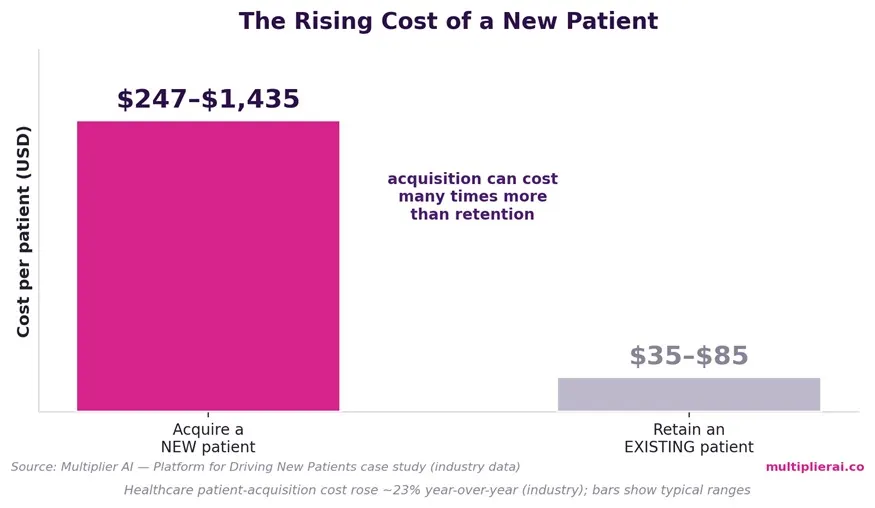
New-patient growth is harder and costlier than it used to be. Acquiring a new patient can cost anywhere from $247 to $1,435, while retaining an existing one costs a small fraction of that — and healthcare acquisition costs have risen roughly 23% year over year as digital advertising gets more expensive. When every new patient costs more, spending without precise targeting quietly destroys margin. The answer isn’t a bigger budget; it’s smarter targeting.
Find the Right Patients Before You Spend
The Platform for Driving New Patients starts with the data, not the ad budget. It analyses patient profiles and behaviours to identify new, high-intent segments — the people most likely to need care and to book — then drives them to action with AI-personalized campaigns and nudges instead of one-size-fits-all advertising. Spending follows insight, so the hospital stops paying to reach the wrong people.
Reach Beyond Your Catchment With Medical Camps
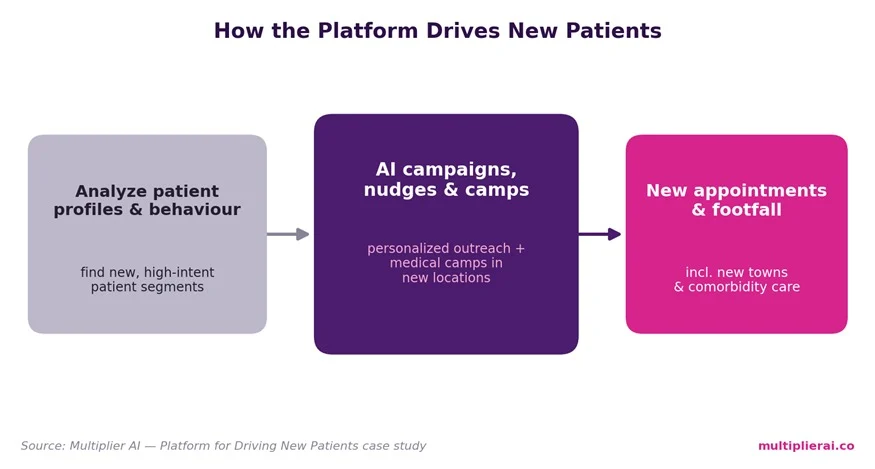
Some of the biggest growth sits outside a hospital’s usual catchment area. The platform plans medical camps in new towns and locations, and runs location-aware campaigns around them, so the hospital can build presence and footfall where it previously had none. This is how a hospital grows its map, not just its market share.
The Results — More Visits, More Comorbidity Care, New Geographies
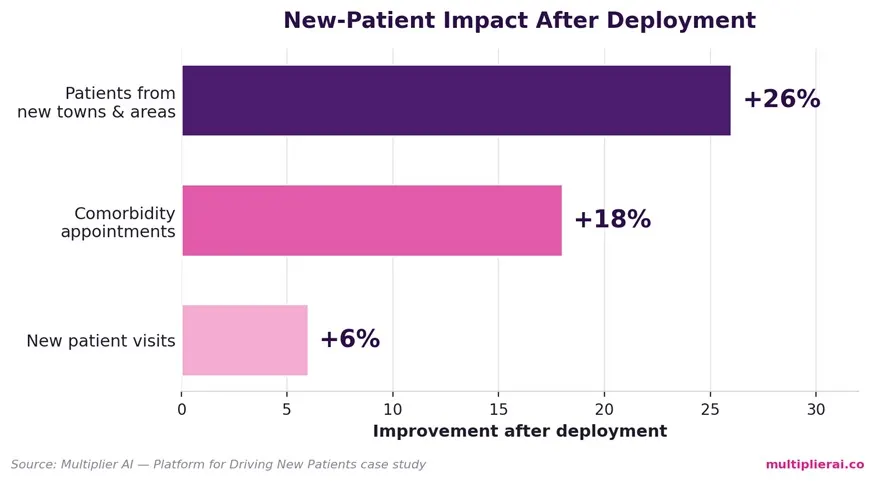
Targeted, location-aware acquisition turned rising spend into measurable growth — across volume, related care, and new geographies.
Built for Hospitals — Why Multiplier AI
Multiplier AI is built specifically for hospitals and providers, not retrofitted from a generic ad platform. The Platform for Driving New Patients works alongside the Patient Intelligence Platform (retention) and the Doctor Referral Platform (referrals) to grow acquisition, loyalty, and referrals together — all while respecting patient-data privacy under DPDP. Explore other Multiplier AI case studies.
“We were spending more every year for fewer new patients. Now we target the right people in the right towns — and the appointments show it.”
Acquisition is expensive and rising — a new patient can cost $247–$1,435 vs $35–$85 to retain, with CAC up ~23% year over year.
Target before you spend — AI profile analysis finds high-intent patients so budget isn’t wasted on the wrong people.
Geography is growth — AI-planned medical camps opened new towns, driving 26% more patients from new areas.
Measure what works — channel clarity turned guesswork into efficient, repeatable acquisition.
Frequently Asked Questions
Ready to See Similar Results?
Talk to our team about your challenges. No pitch — just a real conversation about what you need.
Schedule a 30-Minute Free Consultation →Let's Discuss Your Requirements