Real Time Physician Intelligence Platforms for Pharma Commercial Teams
What is a real-time physician intelligence platform?
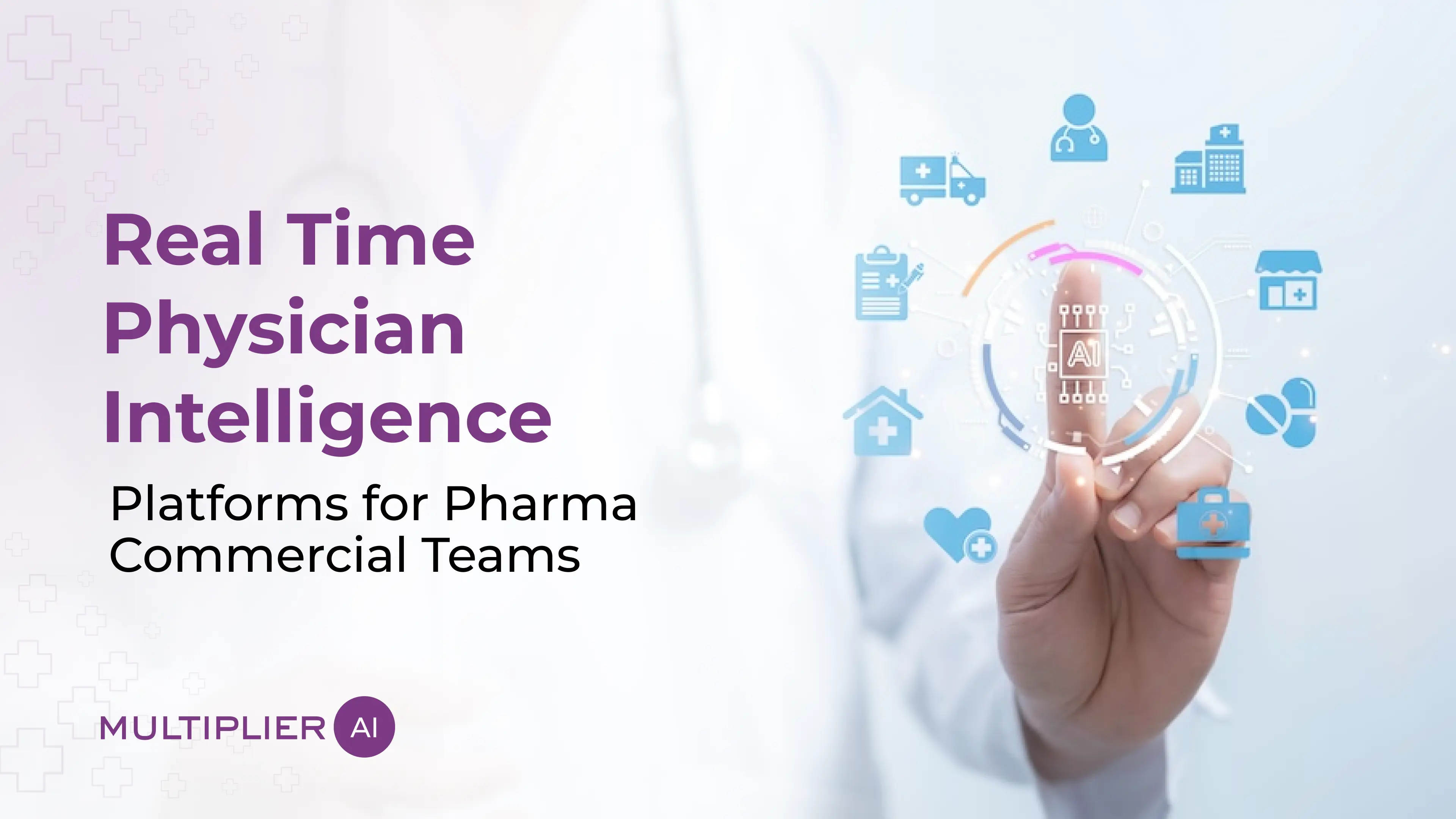
A real-time physician intelligence platform is an AI-powered system that continuously collects, updates, and analyzes HCP data from CRM systems, digital engagement platforms, prescription analytics, conferences, publications, and external datasets to generate actionable physician insights for pharma commercial teams.
What Is Physician Intelligence in Pharma
Physician intelligence refers to the collection and analysis of data that provides insight into healthcare professional behavior, expertise, and engagement patterns.
These insights help pharmaceutical companies understand how physicians interact with therapies, research publications, and educational resources.
Physician intelligence systems typically analyze several categories of information.
Professional background
Physician specialty, education, and institutional affiliations provide context about clinical expertise.
Prescribing patterns
Prescription data reveals which physicians treat patients within specific therapeutic areas.
Research activity
Participation in clinical trials, scientific publications, and medical conferences highlights physician expertise and influence.
Engagement behavior
Interactions with sales representatives, digital platforms, and educational content reveal physician interests and communication preferences.
Combining these insights allows pharmaceutical companies to build comprehensive physician profiles.
Why Real Time Data Matters
In modern healthcare environments physician behavior changes quickly.
Doctors attend webinars about emerging therapies, participate in clinical research discussions, and explore digital educational content.
Each of these activities provides insight into physician interests.
However if organizations rely only on historical datasets, these signals may not be captured quickly enough to inform engagement strategies.
Real time physician intelligence platforms continuously monitor physician activity across multiple data sources.
This allows commercial teams to identify meaningful engagement opportunities as they occur.
For example a physician who recently attended a virtual conference about a therapy area may benefit from follow up communication that provides additional clinical information.
Real time insights allow organizations to respond quickly and deliver relevant communication.
Real-World Impact of Delayed Physician Data
In real-world pharmaceutical commercial operations, delays in physician data updates can directly impact engagement outcomes and campaign performance. When physician activity signals such as webinar participation, content engagement, or prescribing shifts are not captured in real time, commercial teams often miss critical windows for meaningful interaction. This results in delayed outreach, reduced relevance, and lower engagement rates. Organizations that rely on periodic data updates frequently struggle to align their sales and marketing efforts with current physician behavior, creating inefficiencies across commercial operations.
Related: see our companion article on how to build a 360 degree HCP profile using AI and real time data.
Data Sources for Real Time Physician Intelligence
Real time intelligence platforms integrate multiple data streams.
These data sources may include:
CRM interaction data
Records of meetings between representatives and physicians provide valuable context about past engagement.
Digital engagement platforms
Webinar attendance, content downloads, and digital learning activity reveal physician interests.
Medical education events
Participation in conferences or advisory boards indicates professional involvement in scientific discussions.
Research and publication databases
Updates about physician research activity provide insight into emerging clinical expertise.
Prescription analytics
Changes in prescribing patterns may signal shifts in physician treatment preferences.
Integrating these data streams allows real time intelligence platforms to monitor physician activity continuously.
The Role of Artificial Intelligence
Artificial intelligence plays a crucial role in transforming raw physician data into actionable insights.
Real time platforms generate large volumes of information that would be difficult for humans to analyze manually.
AI models evaluate engagement signals and identify patterns that indicate meaningful changes in physician behavior.
For example:- machine learning models may detect that a physician who recently downloaded several research articles about a therapy area is showing increased interest in related treatments.
The platform can then notify commercial teams about this change.
AI systems also help filter irrelevant signals and highlight insights that are most valuable for decision making.
Applications for Commercial Teams
Real time physician intelligence platforms support several important pharmaceutical activities.
Sales planning
Sales representatives receive alerts when physicians demonstrate increased interest in specific therapies.
These alerts help representatives schedule meetings at the most appropriate times.
Marketing campaign optimization
Marketing teams can adjust digital campaigns based on physician engagement signals.
For example physicians who show strong interest in clinical research may receive invitations to educational webinars.
Medical affairs engagement
Medical affairs teams can identify physicians who are actively participating in scientific discussions and may be suitable candidates for research collaboration.
Key opinion leader discovery
Real time monitoring of research activity can reveal emerging experts within medical communities.
GET ACTIONABLE AI AND HEALTHCARE INSIGHTS THAT HELP YOU STAY AHEAD IN A FAST-CHANGING PHARMA WORLD
Benefits of Real Time Physician Intelligence
Organizations that adopt real time intelligence platforms experience several advantages.
Faster decision making
Commercial teams can respond quickly to changes in physician behavior.
More relevant engagement
Communication strategies become more effective when aligned with real time physician interests.
Improved sales productivity
Sales representatives spend less time analyzing physician data and more time conducting meaningful interactions.
Stronger commercial analytics
Continuous data collection provides deeper insight into physician engagement patterns.
Challenges in Implementing Real Time Platforms
Implementing real time physician intelligence systems requires careful planning.
Data integration
Multiple data sources must be integrated into a unified platform.
Data governance
Organizations must ensure that physician data is managed responsibly and complies with regulatory requirements.
Technology infrastructure
Real time data processing requires advanced analytics platforms and scalable computing resources.
Organizational adoption
Commercial teams must adapt their workflows to incorporate real time insights.
The Future of Physician Intelligence
Real time physician intelligence platforms are likely to evolve significantly in the coming years.
Future systems may include capabilities such as:
- predictive models that anticipate physician engagement trends
- automated recommendations for engagement strategies
- integration with digital health platforms and medical education systems
- conversational interfaces that allow teams to query physician data in natural language
These advancements will make physician intelligence platforms more powerful and easier to use.
Conclusion
Physician data has always been essential for pharmaceutical commercial operations. However traditional data platforms often rely on periodic updates that fail to capture rapidly changing physician behavior.
Real time physician intelligence platforms provide a more dynamic approach by continuously monitoring physician activity across multiple data sources.
Artificial intelligence analyzes these signals and highlights insights that help commercial teams identify engagement opportunities as they emerge.
By enabling faster decision making and more relevant communication strategies, real time physician intelligence platforms help pharmaceutical companies strengthen relationships with healthcare professionals.
As digital engagement continues to expand across healthcare systems, these platforms will become increasingly important for organizations seeking to understand and respond to physician behavior effectively.
Frequently Asked Questions For Real-Time Physician Intelligence Platform for Pharma Commercial Teams
Physician intelligence refers to the analysis of data related to healthcare professional behavior, expertise, and engagement patterns.
It is a system that continuously collects and analyzes physician activity data to generate actionable insights for commercial teams.
Real time insights help organizations respond quickly to physician engagement signals and deliver more relevant communication.
These platforms use artificial intelligence, machine learning, and advanced analytics to process large datasets.
Yes. Sales representatives can prioritize outreach based on real time physician activity and engagement signals.
GET ACTIONABLE AI AND HEALTHCARE INSIGHTS THAT HELP YOU STAY AHEAD IN A FAST-CHANGING PHARMA WORLD
Let's Discuss Your Requirements