AI Omnichannel HCP Engagement Platform in Pharma: Complete Guide
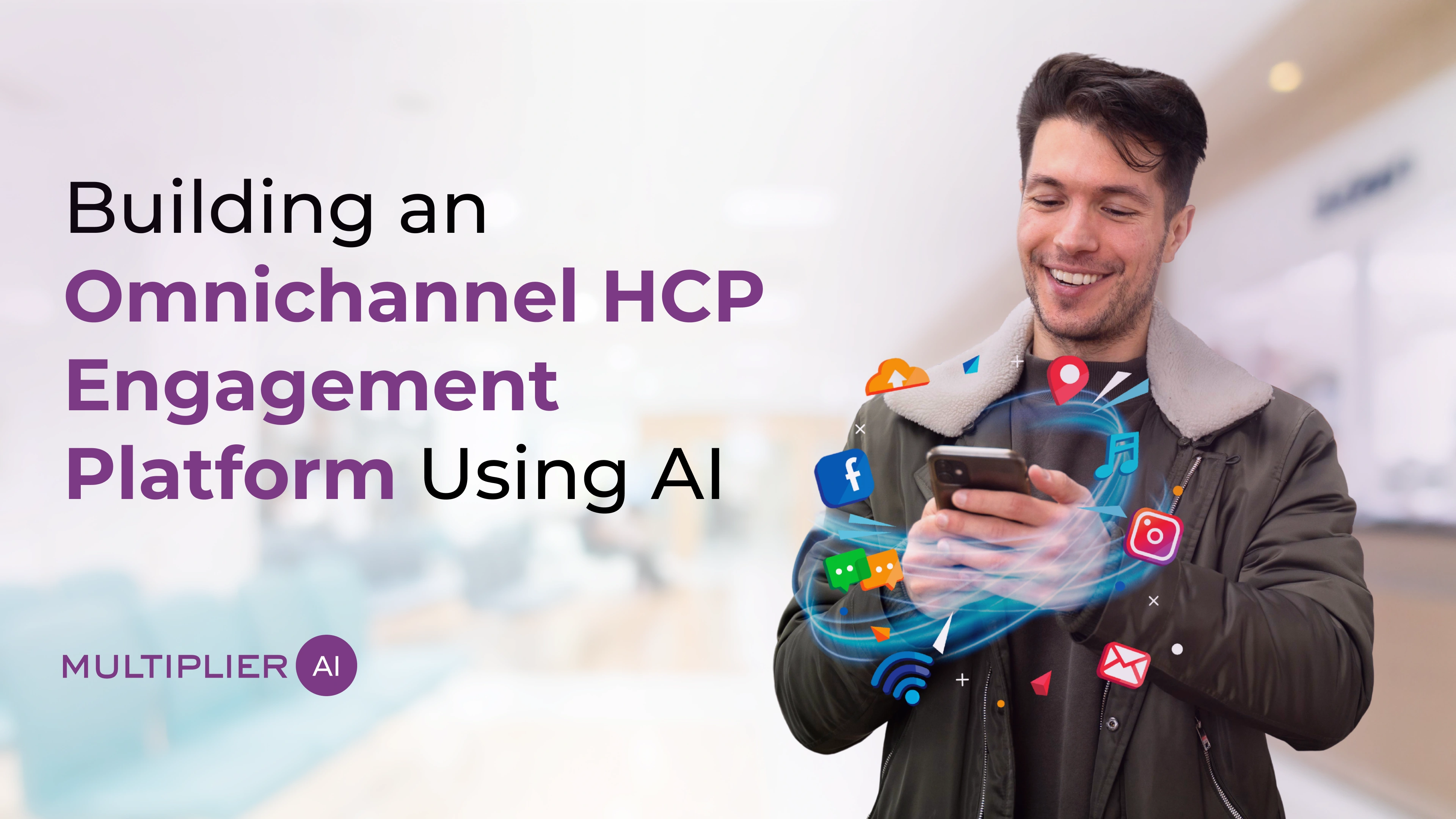
Pharmaceutical companies are increasingly investing in AI omnichannel HCP engagement platforms to better understand and engage healthcare professionals across sales, marketing, medical, and digital channels.
Sales representatives conduct face-to-face meetings. Marketing teams run digital campaigns. Medical affairs teams manage scientific interactions. Digital teams track email, webinar, website, and content engagement. Each of these interactions generates valuable information about physician interests and engagement behavior.
However, many pharmaceutical companies still manage these channels separately. Sales teams track interactions in CRM systems. Marketing teams analyze email engagement data through marketing automation platforms. Medical affairs teams maintain their own records of conference participation and scientific discussions.
AI omnichannel engagement works best when built on accurate doctor data and physician intelligence. Without this foundation, engagement remains fragmented even when multiple channels are active.
When systems operate independently, it becomes difficult to develop a comprehensive understanding of physician engagement. This fragmentation often leads to inconsistent communication strategies. A physician may receive multiple messages about the same topic or may be contacted through channels that are not aligned with their preferences.
Omnichannel engagement platforms address this challenge by integrating multiple communication channels into a unified system. When artificial intelligence is added to these platforms, pharmaceutical companies can analyze physician engagement patterns and deliver more relevant interactions across every channel.
This article explains how AI-powered omnichannel HCP engagement platforms work, what data and architecture they require, how Next Best Action supports execution, and why these platforms are becoming essential for modern pharmaceutical commercial strategies.
What is an AI omnichannel HCP engagement platform?
An AI omnichannel HCP engagement platform is a unified system that connects physician data, CRM activity, digital engagement, approved content, channel orchestration, consent controls, and AI-driven recommendations into one coordinated HCP journey.
The goal is not simply to use more channels. The goal is to ensure that every interaction contributes to a coherent, personalized, and compliant experience for healthcare professionals.
In pharmaceutical commercial operations, these channels typically include:
- In-person meetings with sales representatives
- Email communication
- Digital education platforms
- Webinars and virtual events
- Professional conferences
- Medical information portals
- Mobile and WhatsApp engagement, where permitted
- Scientific and medical affairs interactions
For example, if a physician attends a webinar about a therapy area, a representative may follow up with additional clinical research during the next meeting. If the physician later downloads related content, the platform can recommend a relevant follow-up message, content asset, or medical affairs action.
This type of coordinated communication improves the relevance and effectiveness of physician engagement.
Why Omnichannel Engagement Is Important
Healthcare professionals face significant information overload. Physicians receive communications from pharmaceutical companies, medical journals, healthcare institutions, professional networks, conferences, and digital education platforms.
If pharmaceutical companies communicate through disconnected channels, physicians may receive repetitive or irrelevant messages. Omnichannel engagement platforms help organizations coordinate these interactions so communication remains focused, timely, and relevant.
Several trends have accelerated the need for omnichannel HCP engagement strategies:
Digital transformation in healthcare
Physicians increasingly rely on digital resources to access medical information. Virtual education events, online platforms, and digital content have become common sources of clinical knowledge.
Reduced access for sales representatives
Many healthcare institutions limit in-person visits from pharmaceutical representatives. Digital and hybrid engagement channels help maintain communication when face-to-face meetings are not possible.
Growing complexity of therapies
Modern treatments often involve complex mechanisms, patient eligibility criteria, and clinical data. Coordinated communication helps physicians understand these therapies more effectively.
Need for personalized engagement
Physicians differ in specialty, patient mix, therapy interest, content preference, and channel behavior. A generic engagement strategy cannot serve every HCP equally well.
Core Components of an AI Omnichannel HCP Engagement Platform
Building an effective omnichannel engagement platform requires several key components.
Unified physician data platform
The foundation of an omnichannel system is a unified physician database that integrates data from multiple sources.
These sources may include:
- CRM interaction records
- marketing campaign data
- webinar attendance records
- conference participation
- prescription trends
Combining these datasets allows organizations to create comprehensive physician profiles.
Engagement orchestration engine
The orchestration layer manages communication across multiple channels. It ensures that messages delivered through different channels remain coordinated.
For example the system may schedule email communications based on previous interactions with sales representatives.
Artificial intelligence analytics
AI models analyze physician behavior and identify patterns that indicate engagement preferences.
These insights help determine which channel is most effective for a particular physician.
Content management systems
Educational resources, clinical research materials, and marketing content must be accessible across channels.
Content platforms ensure that the right information is delivered during each interaction.
How Artificial Intelligence Enhances Omnichannel Engagement
Artificial intelligence transforms omnichannel platforms from simple communication tools into intelligent engagement systems. AI turns omnichannel engagement from campaign coordination into intelligent decision support.
Physician behavior analysis
AI models analyze how physicians interact with different communication channels. Some physicians may prefer attending virtual events, while others respond more positively to in-person discussions or concise email summaries.
Channel preference prediction
AI can recommend which communication channel is most likely to produce meaningful engagement for a specific physician based on past behavior and similar HCP patterns.
Content relevance scoring
AI systems evaluate physician interests and recommend educational content aligned with clinical focus, therapy relevance, and prior engagement.
Timing optimization
Machine learning models can determine the optimal time to deliver communication based on physician activity patterns and previous response behavior.
Engagement fatigue detection
AI can identify when an HCP is receiving too many messages or showing declining responsiveness, helping teams pause, reduce frequency, or change the engagement approach.
Physician journey mapping
AI can map how physicians move from awareness to interest, deeper education, discussion, and potential adoption. This helps teams design coordinated journeys instead of isolated campaigns.
Prescriber segmentation helps personalize omnichannel journeys by physician behavior, therapy relevance, and clinical context.
Role of Next Best Action in Omnichannel Engagement
Next Best Action is the intelligence layer that makes omnichannel engagement operational. It helps pharma teams decide which HCP to engage, which channel to use, what content to share, when to follow up, when to pause communication, and when to route a scientific question to medical affairs.
Next Best Action helps pharma teams decide the right channel, timing, content, and follow-up for each HCP by converting data signals into practical recommendations.
For example, if a physician opens an email on a therapy topic, attends a webinar, and later downloads a related clinical summary, the platform may recommend a representative follow-up with a specific discussion point. If the physician has opted out of a channel, the system should block that channel and recommend an eligible alternative.
CRM vs Omnichannel HCP Engagement Platform
CRM is necessary, but it is not enough to run omnichannel engagement on its own. CRM systems are valuable for storing field activity and historical interactions, but omnichannel platforms coordinate engagement across sales, marketing, medical, content, digital, and compliance workflows.
| CRM | Omnichannel HCP Engagement Platform |
| Stores interactions | Coordinates engagement |
| Field-team focused | Sales, marketing, medical, and digital focused |
| Mostly historical | Real-time and predictive |
| Limited content orchestration | Content and channel orchestration |
| Reporting-focused | Recommendation-focused |
| Often siloed | Integrated across systems |
Traditional CRM systems often struggle when consent, engagement, and channel data remain fragmented. This is why an AI omnichannel platform should act as an intelligence and orchestration layer above CRM, not merely as
Content Orchestration and Modular Content
Omnichannel engagement fails if content is not organized, approved, and reusable. A platform may have strong data and AI capabilities, but if content is not ready for different channels and HCP contexts, execution becomes slow and inconsistent.
A strong content orchestration layer should include an approved content library, content tagging, channel-specific formats, therapy-area mapping, HCP segment mapping, MLR or compliance review, and reusable approved content modules.
For example, the same approved clinical message may need to appear as a short email, a rep discussion point, a webinar follow-up, a mobile message, or a longer educational asset. Modular content makes this possible without recreating every asset from scratch.
A Hyper Personalized Content Platform can help pharma teams organize approved content, personalize messages for relevant HCP cohorts, and maintain consistency across omnichannel engagement.
Data Signals Used in Omnichannel Platforms
Effective AI driven engagement requires access to multiple data signals.
Interaction history
Past meetings and conversations provide context for future engagement.
Digital engagement activity
Email responses, webinar participation, and content downloads reveal physician interests.
Clinical focus areas
Specialty information and prescribing patterns indicate which therapies are most relevant for a physician.
Professional activity
Conference presentations, research publications, and clinical trial involvement highlight areas of expertise.
Combining these signals allows AI models to develop a detailed understanding of physician engagement behavior.
Benefits of AI Powered Omnichannel Engagement
Pharmaceutical companies adopting omnichannel engagement platforms experience several advantages.
Consistent communication strategies
Coordinated communication ensures that physicians receive clear and consistent information across channels.
Improved physician relationships
Personalized engagement strategies demonstrate that pharmaceutical companies understand physician interests and professional needs.
Higher campaign effectiveness
Targeted communications produce stronger engagement than generic outreach.
Enhanced commercial insights
Unified engagement data allows organizations to analyze physician behavior more comprehensively.
Compliance and Governance in AI Omnichannel Engagement
A pharma omnichannel platform must be personalized, but it must also be compliant by design. Compliance cannot be added after engagement workflows are built. It must be part of the platform architecture.
Governance should cover explicit consent, opt-outs, channel permissions, frequency caps, data minimisation, purpose limitation, approved content controls, audit trails, and vendor governance.
Omnichannel platforms should use only relevant and necessary HCP data for defined engagement purposes.
Each engagement activity should align with the purpose originally defined and communicated so that data is not reused beyond the approved scope.
A DPDP-Compliant HCP Marketing layer can support consent-driven workflows, channel permissions, purpose limitation, withdrawal handling, and audit-ready engagement.
GET ACTIONABLE AI AND HEALTHCARE INSIGHTS THAT HELP YOU STAY AHEAD IN A FAST-CHANGING PHARMA WORLD
Implementation Roadmap: How to Build the Platform
Building an AI omnichannel HCP engagement platform should be approached as a data, workflow, and operating-model transformation rather than a single campaign project.
- Audit existing HCP data and engagement systems.
- Validate and deduplicate physician records.
- Build a unified HCP data layer.
- Integrate CRM, digital, webinar, content, and mobile systems.
- Add AI analytics, segmentation, and engagement intelligence.
- Build Next Best Action workflows for sales, marketing, and medical teams.
- Implement consent, governance, and audit controls.
- Train sales, marketing, medical, analytics, and compliance teams.
- Track outcomes, field adoption, content performance, and journey progression.
- Optimize continuously based on feedback and engagement results.
Benefits of AI-Powered Omnichannel Engagement Platforms
Pharmaceutical companies adopting AI omnichannel engagement platforms experience benefits across commercial, marketing, medical, analytics, compliance, and leadership teams.
| Team | Benefit |
| Sales | Better pre-call planning, HCP prioritization, and follow-up |
| Marketing | More targeted campaigns and improved content relevance |
| Medical Affairs | More relevant scientific engagement and KOL identification |
| Analytics | Unified measurement of HCP journeys and campaign performance |
| Compliance | Better audit visibility, consent control, and channel governance |
| Leadership | Clearer commercial performance view and resource allocation |
The most important benefit is not simply higher activity. It is more relevant and coordinated engagement that helps each team act from the same understanding of the HCP.
Challenges in Building Omnichannel Platforms
Despite the benefits, building omnichannel engagement platforms presents several challenges.
Data integration complexity
Integrating multiple datasets from CRM systems, marketing platforms, and external data providers can be technically complex.
Organizational alignment
Sales, marketing, and medical affairs teams must collaborate closely to coordinate engagement strategies.
Content management
Delivering consistent messaging across multiple channels requires strong content governance.
Data privacy and compliance
Physician data must be handled responsibly to comply with regulatory requirements.
Common Implementation Mistakes
Omnichannel transformation fails when it is treated as a campaign project instead of a data and operating model. Common mistakes include:
- Confusing multichannel activity with true omnichannel orchestration.
- Using poor-quality or duplicate HCP data.
- Failing to integrate CRM with digital and content systems.
- Building engagement workflows without a consent layer.
- Using generic content that cannot be adapted by HCP context.
- Adding too many disconnected tools instead of one coordinated architecture.
- Ignoring field adoption and change management.
- Failing to create analytics feedback loops that improve future recommendations.
The Role of Generative AI in Future Engagement Platforms
Generative AI technologies are expanding the capabilities of omnichannel platforms.
These systems can automatically generate personalized communication summaries, recommend educational materials, and provide conversational interfaces for commercial teams.
For example a representative preparing for a physician meeting may receive an AI generated summary of recent engagement activity and suggested discussion topics.
These capabilities make engagement platforms more intelligent and easier to use.
The Future of Omnichannel HCP Engagement
The pharmaceutical industry is moving toward increasingly integrated engagement ecosystems.
Future omnichannel platforms may incorporate:
- real time physician engagement monitoring
- predictive models for therapy adoption
- automated personalization of medical education content
- deeper integration with healthcare data systems
These technologies will allow pharmaceutical companies to respond more effectively to the evolving needs of healthcare professionals.
How Multiplier AI Helps Build AI Omnichannel HCP Engagement Platforms
Multiplier AI helps pharma teams build AI omnichannel HCP engagement platforms by unifying physician data, validating HCP records, integrating CRM and digital signals, generating AI-driven insights, and activating Next Best Action workflows across sales, marketing, and medical channels.
Multiplier AI supports:
- HCP data validation and enrichment
- 360 degree HCP profiles
- GenAI doctor data insights
- Prescriber segmentation
- CRM and digital engagement integration
- Content recommendation and personalization
- Next Best Action workflows
- Omnichannel orchestration
- Compliant engagement workflows
GenAI doctor data platforms can convert fragmented HCP signals into actionable physician intelligence for sales, marketing, and medical teams.
GPT and LLM Based Tools can help summarize engagement insights, identify weak points, support campaign analysis, and generate recommendations for commercial teams.
Multiplier AI helps pharma teams build AI omnichannel HCP engagement platforms using validated HCP intelligence, AI insights, content orchestration, and compliant engagement workflows.
Conclusion
Omnichannel engagement platforms represent an important evolution in how pharmaceutical companies interact with healthcare professionals. By integrating multiple communication channels into a unified system, organizations can deliver consistent and personalized interactions that align with physician preferences.
Artificial intelligence enhances these platforms by analyzing physician behavior, predicting channel preferences, recommending relevant content, optimizing timing, and supporting Next Best Action workflows. This combination of unified data, coordinated communication, and AI-driven insights allows pharmaceutical companies to build stronger relationships with physicians and improve the impact of commercial initiatives.
An AI omnichannel HCP engagement platform is not just a digital communication tool. It is a commercial intelligence system that connects doctor data, CRM activity, digital engagement, approved content, Next Best Action, and compliance controls into one coordinated physician journey.
Multiplier AI helps pharma teams build this foundation by unifying HCP data, validating records, generating AI-driven insights, and activating compliant engagement across sales, marketing, and medical channels.
Frequently Asked Questions For AI Omnichannel HCP Engagement Platform in Pharma
Omnichannel HCP engagement is a coordinated communication strategy that integrates multiple channels such as sales visits, email campaigns, webinars, and digital platforms.
It ensures consistent communication with healthcare professionals and improves the relevance of educational and promotional content.
AI analyzes physician behavior to determine the best communication channel, timing, and content for each interaction.
These platforms integrate CRM data, digital engagement signals, prescription trends, and professional activity records.
No. These platforms support representatives by providing insights that help improve physician engagement strategies.
GET ACTIONABLE AI AND HEALTHCARE INSIGHTS THAT HELP YOU STAY AHEAD IN A FAST-CHANGING PHARMA WORLD
Let's Discuss Your Requirements