What Does True Omnichannel Mean in Pharma? And Why Most Companies Are Still Multichannel
What Does Omnichannel Mean in Pharma?
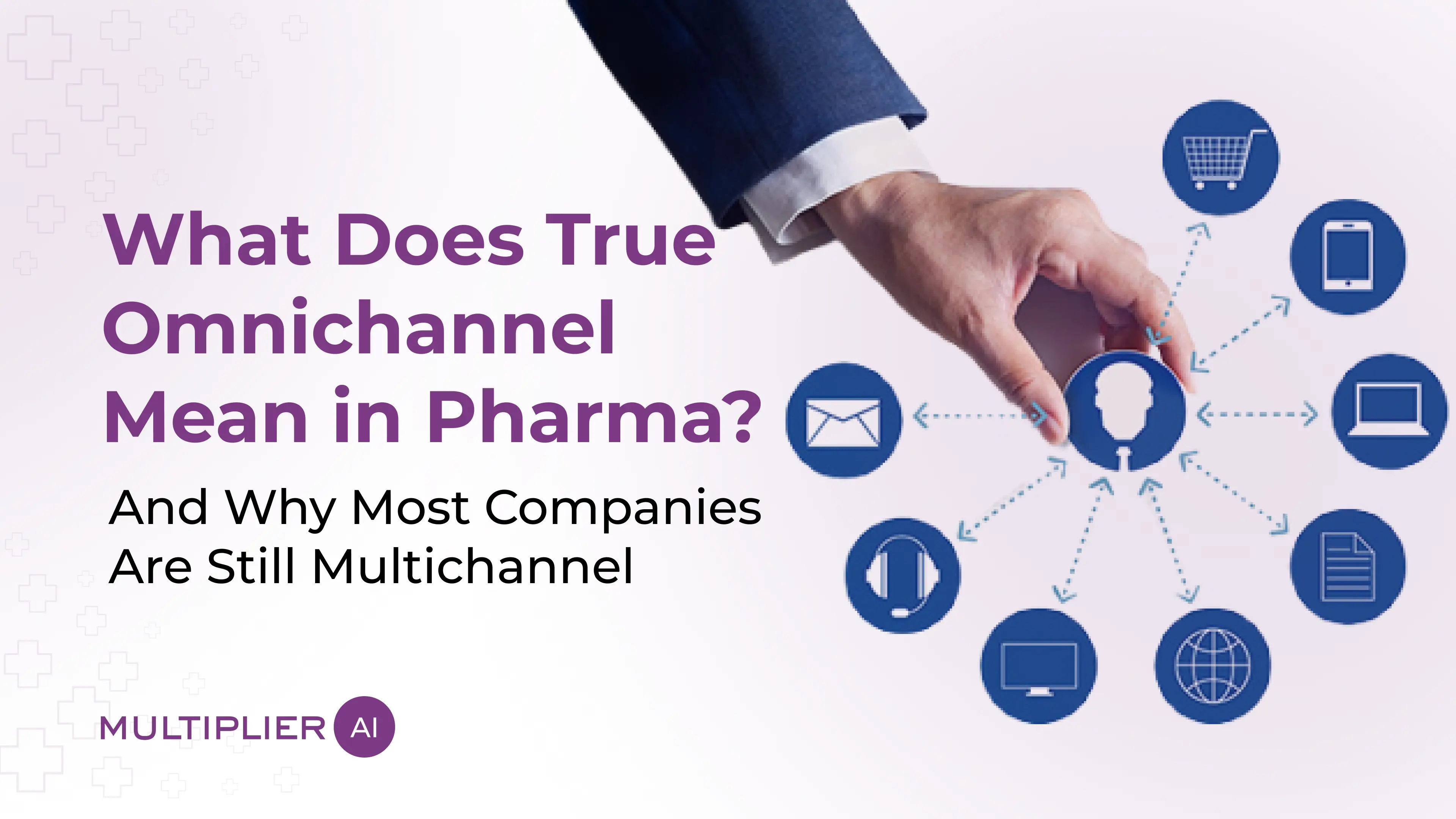
Omnichannel in pharma means creating a connected HCP engagement journey where field visits, email, webinars, digital content, CRM activity, and medical communication work together around the same doctor profile. Unlike multichannel engagement, where each channel operates separately, true omnichannel engagement uses shared data, coordinated timing, and personalized content to make every interaction relevant to the doctor’s current behavior and interests.
In simple terms, multichannel means pharma teams use many channels. Omnichannel means those channels work together.
If you ask ten pharma leaders what omnichannel means, you will likely get ten different answers. Some will describe it as using multiple channels. Others will say it is about coordinating campaigns. A few will mention personalization. Almost everyone will claim they are already doing it.
But when you look at how most organizations actually operate, the reality is very different.
Email campaigns are planned separately from field visits. Digital teams run their own programs. CRM systems capture interactions, but those insights rarely influence the next action. Each channel exists, but they do not truly work together.
This is not omnichannel. It is multichannel with better branding.
The distinction may sound subtle, but it has a direct impact on engagement, efficiency, and ultimately revenue. When channels operate independently, the experience feels fragmented to the doctor. When they are orchestrated, the experience becomes coherent and relevant.
Understanding this difference is the starting point for any serious pharma commercial strategy in 2026.
What omnichannel actually means in practice
True omnichannel engagement is not defined by how many channels you use. It is defined by how well those channels work together around the individual doctor.
True omnichannel engagement in pharma depends on a connected HCP journey, not just the presence of multiple communication channels.
At its core, omnichannel means that every interaction, regardless of channel, is informed by the same underlying understanding of the HCP. It ensures that communication is consistent, coordinated, and responsive to behavior.
For example, if a doctor engages with a piece of clinical content through email, that signal should influence what happens next. The next field visit should reflect that interest. The message should build on the previous interaction instead of repeating generic information.
This continuity is what creates a seamless experience.
In a true omnichannel system, channels are not independent execution layers. They are connected touchpoints within a single engagement journey.
Why most pharma companies remain stuck in multichannel mode
The shift from multichannel to omnichannel is not just a technology upgrade. It requires a fundamental change in how teams operate.
One of the biggest barriers is organizational structure. Different teams often own different channels. Marketing handles email and digital campaigns. Field teams manage in-person interactions. Data teams focus on analytics. Each function optimizes for its own goals, which creates silos.
Even when data is shared, it is rarely used in real time. Insights are often reported after campaigns are completed, which limits their usefulness for ongoing decision making.
Another challenge is the reliance on static planning. Campaigns are designed in advance and executed according to schedule, regardless of how doctors respond. This makes it difficult to adapt to changing behavior.
Technology also plays a role. Many systems were built to manage individual channels rather than orchestrate them. Integrating these systems can be complex, which slows down progress.
The result is a situation where companies believe they are omnichannel because they are present across channels, but in reality, those channels are not connected in a meaningful way.
What a doctor actually experiences
To understand the impact of this gap, it helps to look at the experience from the doctor’s perspective.
In a multichannel setup, a doctor might receive an email about a new therapy, see a digital ad with a different message, and then have a rep visit discussing yet another angle. Each interaction exists in isolation. There is no clear narrative connecting them.
This creates cognitive overload. Instead of reinforcing a message, the interactions compete for attention. Over time, this reduces engagement and trust.
In contrast, an omnichannel experience feels intentional. Each interaction builds on the previous one. The doctor receives information that is relevant to their interests and delivered through the right channel at the right time.
This does not just improve engagement. It makes the relationship more meaningful.
The role of data in enabling omnichannel
The foundation of omnichannel engagement is a unified understanding of each HCP. Without this, coordination across channels is not possible.
A GenAI Doctor Data Platform can create this unified HCP view by connecting doctor data, CRM activity, digital signals, and real-time engagement insights into one intelligence layer.
This requires integrating data from multiple sources, including CRM systems, digital engagement platforms, prescription data, and content interactions. The goal is to create a single view that captures both historical behavior and current signals.
However, having data is not enough. It needs to be activated.
This is where many organizations struggle. Data is collected and stored, but it is not used to guide decisions in real time. Omnichannel requires a shift from reporting to decision support.
Every interaction should be influenced by the latest available information. This means systems need to process data continuously and translate it into actionable insights.
Moving from campaigns to journeys
One of the most important shifts in omnichannel strategy is moving away from campaign-centric thinking.
Traditional marketing focuses on campaigns with defined start and end dates. Messages are planned in advance and delivered according to schedule. While this approach provides structure, it does not account for individual behavior.
Omnichannel engagement focuses on journeys instead.
A journey is not defined by a timeline but by the sequence of interactions experienced by the doctor. It evolves based on how the doctor responds. If a doctor shows interest in a specific topic, the journey adapts to provide more relevant information. If engagement drops, the system adjusts the approach.
This dynamic nature is what makes omnichannel effective. It ensures that communication remains relevant throughout the interaction.
How AI makes true omnichannel possible
Coordinating multiple channels in real time is not feasible through manual processes alone. The complexity of data and the speed of change require automation.
AI plays a critical role in this transformation.
AI in omni channel marketing for pharmaceuticals helps teams analyze behavior, personalize engagement, and coordinate messaging across digital and field channels.
It analyzes large volumes of data to identify patterns and predict behavior. It determines which channel is most appropriate for a given interaction and what message is likely to resonate. It also ensures that actions are coordinated across channels, avoiding duplication or conflict.
A Hyper Personalized Content Platform helps pharma teams convert these AI insights into doctor-specific content journeys across email, WhatsApp, digital, and field engagement.
For example, if a doctor has recently engaged with digital content, the system might recommend a follow-up email instead of an immediate field visit. If engagement continues, it might then suggest a rep interaction with tailored messaging.
This level of orchestration ensures that each channel supports the others rather than operating independently.
GET ACTIONABLE AI AND HEALTHCARE INSIGHTS THAT HELP YOU STAY AHEAD IN A FAST-CHANGING PHARMA WORLD
How Multiplier AI Supports Omnichannel HCP Engagement
To move from multichannel activity to true omnichannel execution, pharma teams need a connected HCP intelligence layer. This layer should unify doctor data, CRM activity, digital engagement, content interaction, consent status, and real-time physician behavior into one actionable view.
Multiplier AI helps pharma teams build this foundation through AI-powered doctor data, personalized content intelligence, and consent-aware HCP engagement workflows. This allows commercial teams to understand what each HCP has already engaged with, identify the next best interaction, and coordinate field, digital, and content communication more effectively.
With this approach, omnichannel becomes more than a campaign idea. It becomes a practical operating model for improving HCP engagement.
Making omnichannel execution practical
While the concept of omnichannel can seem complex, its implementation can be approached in a structured way.
The first step is to align teams around a shared objective. Instead of optimizing individual channels, the focus should be on improving overall engagement and outcomes. This requires breaking down silos and encouraging collaboration.
The next step is to establish a unified data layer. This involves integrating data from different systems and ensuring that it is accessible in real time. Without this foundation, coordination is not possible.
Once the data is in place, organizations need to define how decisions will be made. This includes setting rules or models that determine how interactions are prioritized and how channels are used.
It is also important to start small. Rather than attempting a full transformation, teams can begin with specific use cases or segments. This allows them to test approaches, learn from results, and scale gradually.
Measuring what actually matters
One of the challenges in omnichannel strategies is measurement. Traditional metrics such as email open rates or call volume do not capture the full picture.
What matters is the overall impact of coordinated interactions.
This includes metrics such as engagement quality, progression through the journey, and changes in prescribing behavior. These indicators provide a better understanding of how effective the strategy is.
It is also important to look at interactions holistically. Instead of evaluating channels separately, organizations should assess how they work together to drive outcomes.
Compliance and Consent in Omnichannel Pharma Engagement
True omnichannel engagement cannot work without strong consent and governance controls. When multiple channels are connected, pharma companies must ensure that every interaction respects the doctor’s consent status, preferred channel, approved purpose, and communication frequency.
A DPDP-Compliant HCP Marketing framework helps ensure that omnichannel engagement respects consent, channel permissions, approved communication purposes, and audit-ready data workflows.
This becomes especially important when CRM, email, WhatsApp, digital ads, webinars, and field teams are all connected. If a doctor withdraws consent from one channel, that update should cascade across the engagement system. If a campaign is approved for one purpose, the same data should not be reused for unrelated outreach without proper controls.
A strong omnichannel strategy should therefore include consent tracking, channel permissions, approved content rules, frequency controls, audit trails, and role-based access. Without these controls, omnichannel can create compliance risk instead of commercial advantage.
Why this shift cannot be delayed
The move toward omnichannel engagement is not driven by trends. It is driven by necessity.
Doctors expect relevant and timely communication. They are less tolerant of generic messaging and more selective about where they invest their attention. At the same time, competition is increasing, making it harder to stand out.
Organizations that continue to operate in multichannel mode will find it increasingly difficult to maintain engagement. Their interactions will feel disconnected and less relevant.
On the other hand, those that adopt true omnichannel strategies will be able to deliver more meaningful experiences. They will build stronger relationships and achieve better results.
Conclusion
Omnichannel is often misunderstood as simply using multiple channels, but its true value lies in coordination and personalization. It is about creating a connected experience where each interaction builds on the previous one.
Most pharma companies are still in the early stages of this journey. They have the channels and the data, but they have not yet fully connected them.
The shift requires changes in technology, processes, and mindset. It requires moving from campaigns to journeys and from static planning to dynamic decision making.
For organizations willing to make this transition, the rewards are significant. Better engagement, more efficient use of resources, and stronger outcomes are all within reach.
The question is not whether omnichannel will become the standard. It already is.
The real question is how quickly companies can move from understanding it to executing it effectively.
Frequently Asked Questions For Omnichannel vs Multichannel in Pharma: Clear Guide for 2026
Omnichannel in pharma means connecting field visits, email, webinars, digital content, CRM data, and medical communication into one coordinated HCP engagement journey.
Multichannel means using multiple channels separately. Omnichannel means those channels are connected and coordinated around the same doctor profile and engagement journey.
Most pharma companies remain multichannel because sales, marketing, medical, CRM, and digital teams often operate in separate systems with limited real-time coordination.
Omnichannel improves HCP engagement by making communication more relevant, timely, consistent, and aligned with each doctor’s behavior and interests.
AI analyzes HCP data, digital signals, CRM activity, content engagement, and channel behavior to recommend the next best interaction across channels.
Pharma teams need CRM data, digital engagement data, prescription insights, content interactions, consent status, and real-time physician behavior signals.
If a doctor engages with clinical content through email, the next field visit should reflect that interest instead of repeating a generic message.
Teams should measure journey progression, cross-channel engagement, content relevance, field follow-up quality, channel fatigue, and consent-safe engagement.
The biggest challenge is not adding more channels. It is connecting data, teams, content, and decision-making into one coordinated HCP journey.
Multiplier AI helps pharma teams unify doctor data, track engagement signals, personalize content, support consent-aware workflows, and coordinate HCP journeys across channels.
GET ACTIONABLE AI AND HEALTHCARE INSIGHTS THAT HELP YOU STAY AHEAD IN A FAST-CHANGING PHARMA WORLD
Let's Discuss Your Requirements