
Pharma companies rarely operate alone. Modern healthcare marketing and commercial operations rely on a complex ecosystem of third party vendors. These include CRM providers, marketing automation platforms, WhatsApp service providers, analytics vendors, data enrichment partners, creative agencies, and cloud infrastructure providers.
Under the Digital Personal Data Protection Act 2023, this ecosystem creates one of the most misunderstood risk areas for pharma organisations.
Many teams assume that compliance responsibility shifts to vendors once data is shared. Under DPDP, this assumption is incorrect. The law places primary accountability on the data fiduciary, which in most pharma marketing contexts is the pharma company itself.
This article explains how DPDP defines responsibilities between pharma companies and third party vendors, where accountability truly sits, and what pharma organisations must do to govern vendor relationships without slowing execution.
DPDP introduces two critical roles.
The data fiduciary is the entity that determines the purpose and means of processing personal data. In pharma marketing, this is almost always the pharma company.
The data processor is any entity that processes personal data on behalf of the fiduciary. This includes vendors, agencies, and technology platforms.
Understanding this distinction is essential because responsibility does not transfer simply because processing is outsourced.
A common misconception is that vendors are responsible for compliance failures involving their systems.
Under DPDP, the data fiduciary remains accountable for ensuring that processing is lawful, consented, and limited to purpose.
If a vendor violates DPDP while processing data on behalf of a pharma company, regulators will look first to the pharma company.
Vendor contracts and SLAs do not override statutory responsibility.
Pharma marketing ecosystems include multiple vendor types.
CRM platforms store doctor data and engagement history. Marketing automation tools execute campaigns. WhatsApp vendors deliver messages. Analytics platforms process behavioural data. Data enrichment vendors add attributes. Agencies design and run campaigns. Cloud providers host infrastructure.
Each vendor interacts with personal data differently. Each creates unique compliance considerations.
DPDP applies across all of them.
Many vendors claim to be compliant.
They may offer features such as opt out handling, encryption, or audit logs. While these features are helpful, they do not guarantee DPDP compliance.
Compliance depends on how the pharma company uses the vendor, how consent is managed, and how data flows across systems.
Vendor compliance statements should be treated as inputs, not assurances.
Consent is often fragmented across vendor systems.
Email platforms manage unsubscribes. WhatsApp vendors manage opt outs. CRMs store consent flags. Analytics tools process data independently.
Under DPDP, consent must be enforced consistently across all vendors.
This requires a central consent authority that vendors integrate with. Vendors should not operate with independent consent logic.
This is where DPDP-compliant HCP marketing architectures become critical. They centralise consent enforcement across vendor ecosystems.
Vendors often process data beyond the immediate execution task.
Analytics vendors may analyse engagement patterns. Platforms may use data to optimise delivery. Agencies may retain data for reporting.
Under DPDP, all such processing must align with the original consented purpose.
Pharma companies must clearly define allowed purposes in vendor contracts and enforce them technically.
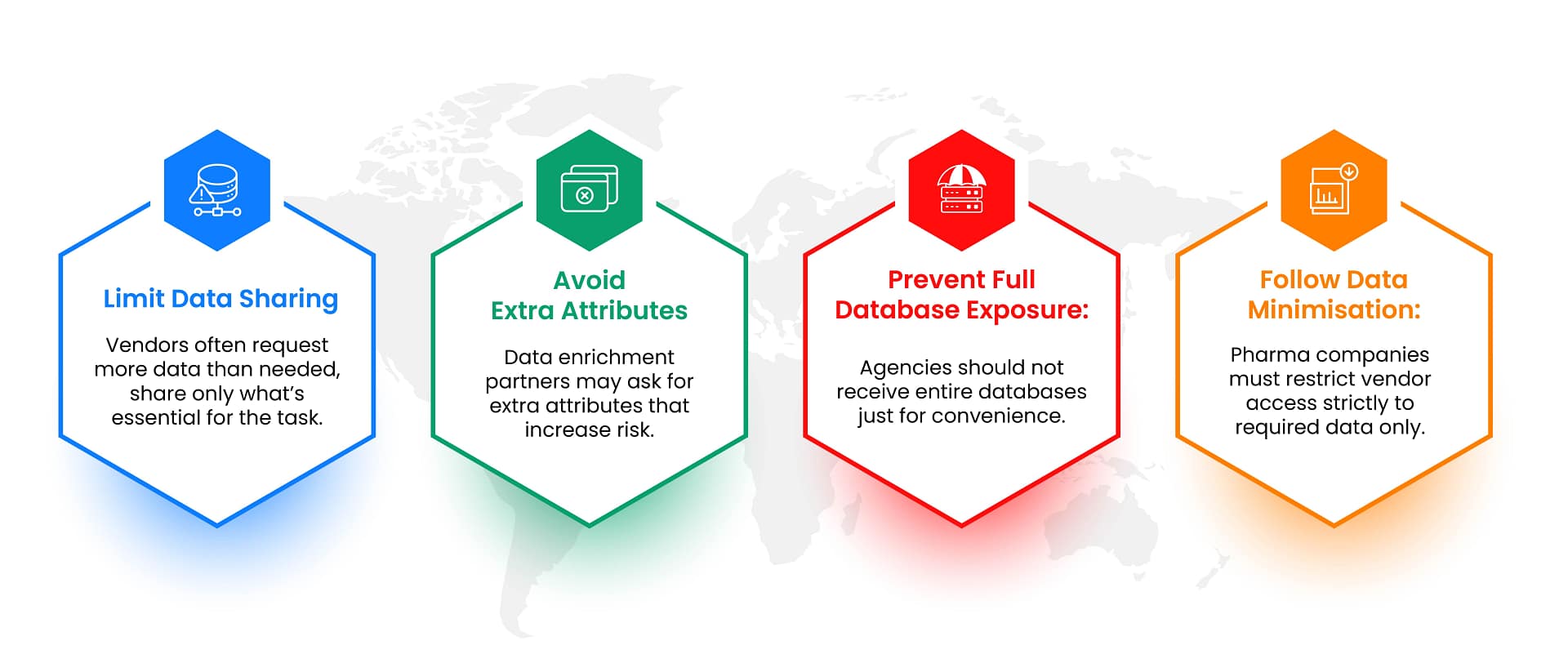
Vendors often request more data than necessary.
Data enrichment partners may ask for additional attributes. Agencies may request full databases for convenience.
Providing excessive data increases risk and violates data minimisation principles.
Pharma companies must limit vendor access to only the data required for the specific task.
Retention and deletion become complex when vendors are involved.
Vendors may retain data after contracts end. Backup systems may hold copies. Reporting datasets may persist.
Under DPDP, the pharma company remains responsible for ensuring deletion or anonymisation across vendors.
Vendor contracts must include clear deletion obligations and verification mechanisms.
Many vendors use sub processors.
Cloud providers, analytics tools, and messaging platforms often rely on additional third parties.
These sub processors also process personal data. DPDP responsibility still flows back to the data fiduciary.
Pharma companies must understand and approve sub processor chains.
Many vendors process data outside India.
DPDP allows cross border processing but requires safeguards.
Pharma companies must know where data is processed, by whom, and under what controls. Blindly accepting global vendor architectures creates exposure.
Vendor due diligence must go beyond questionnaires.
Pharma companies should assess how vendors handle consent, purpose limitation, retention, and deletion in practice.
Periodic audits and reviews strengthen governance.
Trust without verification is risky.
Agencies often manage campaigns end to end.
They may access CRM data, create audiences, run campaigns, and analyse results. Under DPDP, agency actions are treated as actions of the pharma company.
Agencies must be tightly governed, trained, and monitored.
Data incidents involving vendors are common.
DPDP expects timely response and notification. Pharma companies must have visibility into vendor incidents.
Contracts should require vendors to notify incidents immediately. Delayed awareness increases regulatory risk.
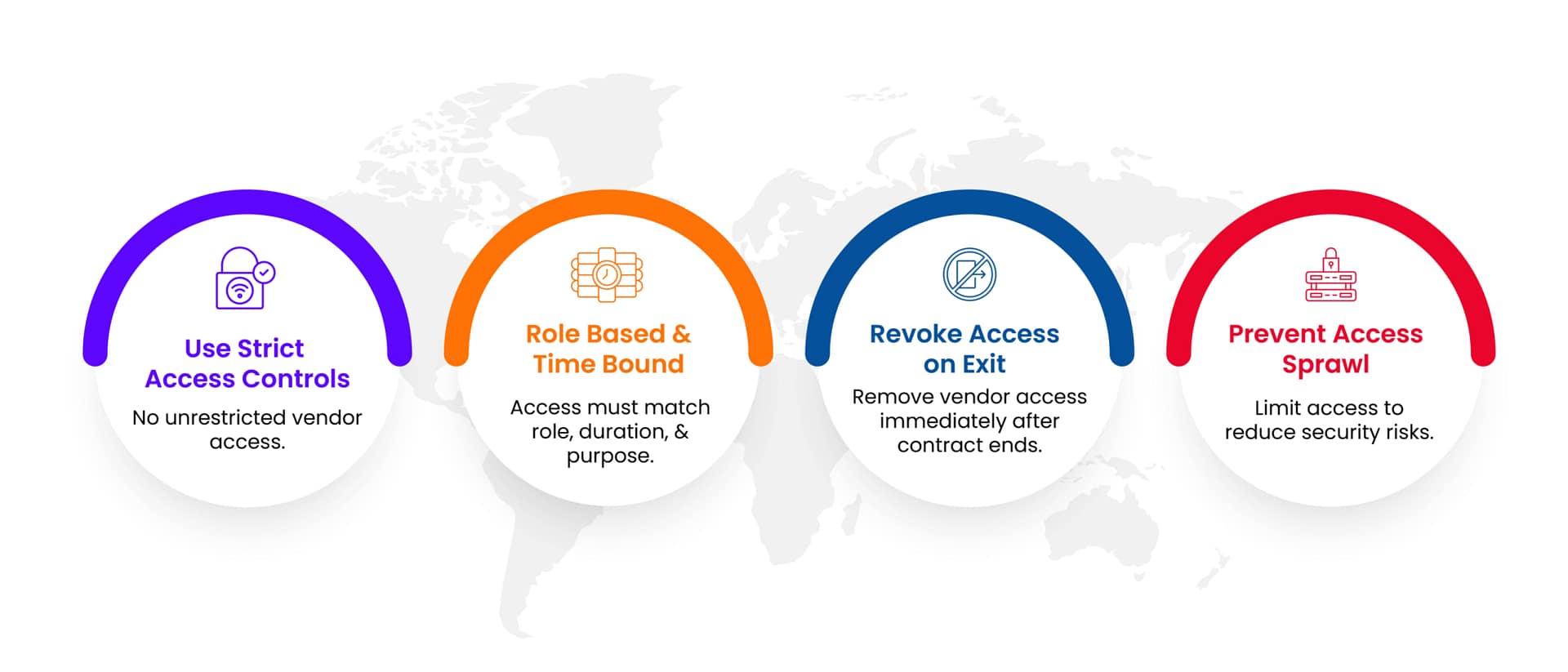
Access controls are critical.
Vendors should not have unrestricted access to data. Access should be role based, time bound, and purpose limited.
Revoking access when contracts end is essential. Access sprawl increases risk significantly.
Vendor related DPDP risk is systemic.
It spans multiple departments, systems, and geographies. It affects reputation, compliance, and operations.
Boards and leadership must understand that outsourcing does not outsource responsibility. Vendor governance should be elevated beyond procurement.
Strong governance reduces incidents, improves compliance confidence, and simplifies audits. It also improves vendor relationships by setting clear expectations.
Over time, disciplined vendor governance becomes a competitive advantage.
Third party vendors are not a compliance shield under DPDP. They are an extension of the pharma company’s processing ecosystem.
Responsibility does not shift when data is shared. It expands.
Pharma organisations that design strong vendor governance, central consent enforcement, and lifecycle controls will be far better positioned to operate confidently under DPDP.
If you are evaluating how to implement DPDP-compliant HCP marketing with full vendor governance and accountability, this page explains how consent-first, vendor aware architectures are being implemented in real pharma environments.