Multiplier AI

Data Minimisation Under DPDP:
Why Collecting Purpose-Aligned Doctor Data Matters

For years, pharma companies have operated under a simple assumption. More data is always better. Larger doctor databases, richer profiles, deeper behavioural signals, and longer retention periods were seen as competitive advantages.

The Digital Personal Data Protection Act 2023 challenges this assumption directly.

Under DPDP, collecting excessive data is not just inefficient. It is a compliance risk. The law introduces data minimisation as a core principle, requiring organisations to collect and process only what is necessary for a clearly defined purpose.

For pharma marketing, commercial, and digital teams, this principle forces difficult but necessary decisions. What data is genuinely required for engagement and what data should no longer be collected or retained.

This article explains data minimisation under DPDP in a practical pharma context, identifies categories of data pharma companies should stop collecting, and outlines how teams can redesign data practices without weakening engagement outcomes.

What Data Minimisation Means Under DPDP

Data minimisation under DPDP means limiting personal data collection to what is necessary to achieve a defined and lawful purpose.

It is not about collecting less data arbitrarily. It is about collecting the right data with clear justification.

If a piece of data does not directly support a stated purpose, its collection and retention must be questioned. This applies equally to new data collection and to legacy data already stored.

For pharma companies, this principle affects doctor databases, patient programs, analytics platforms, and AI systems.
Why Pharma Historically Collected Excessive Data


Pharma marketing evolved in an era where data scarcity was a constraint.

Teams collected every possible attribute because future use cases were uncertain. CRMs became repositories of accumulated data rather than purpose driven systems.

Data enrichment vendors added more fields. Engagement tools generated more signals. Retention periods extended indefinitely.

This accumulation happened gradually and without malicious intent. But DPDP changes the tolerance for this behaviour.

The Risk of Excessive Doctor Data Collection

Doctor data is one of the most heavily collected datasets in pharma.

Beyond basic contact details, many databases include personal phone numbers, personal email addresses, social media handles, family details, travel preferences, behavioural scores, and inferred interests.

Much of this data is not necessary for compliant engagement.

Under DPDP, collecting data without a clear purpose creates risk. It increases the surface area for misuse, breaches, and audit findings.

Data minimisation requires pharma companies to question whether each data element is truly required.

Categories of Doctor Data Pharma Should Reevaluate


Several categories of doctor data deserve immediate scrutiny.

Personal identifiers that are not required for professional engagement should be removed. This includes personal phone numbers when professional contact channels exist.

Inferred attributes based on behaviour or third party sources should be carefully assessed. If consent does not clearly cover such inferences, their use is risky.

Historical engagement data that no longer serves an active purpose should be archived or deleted.

Collecting data simply because it might be useful later is not defensible under DPDP.

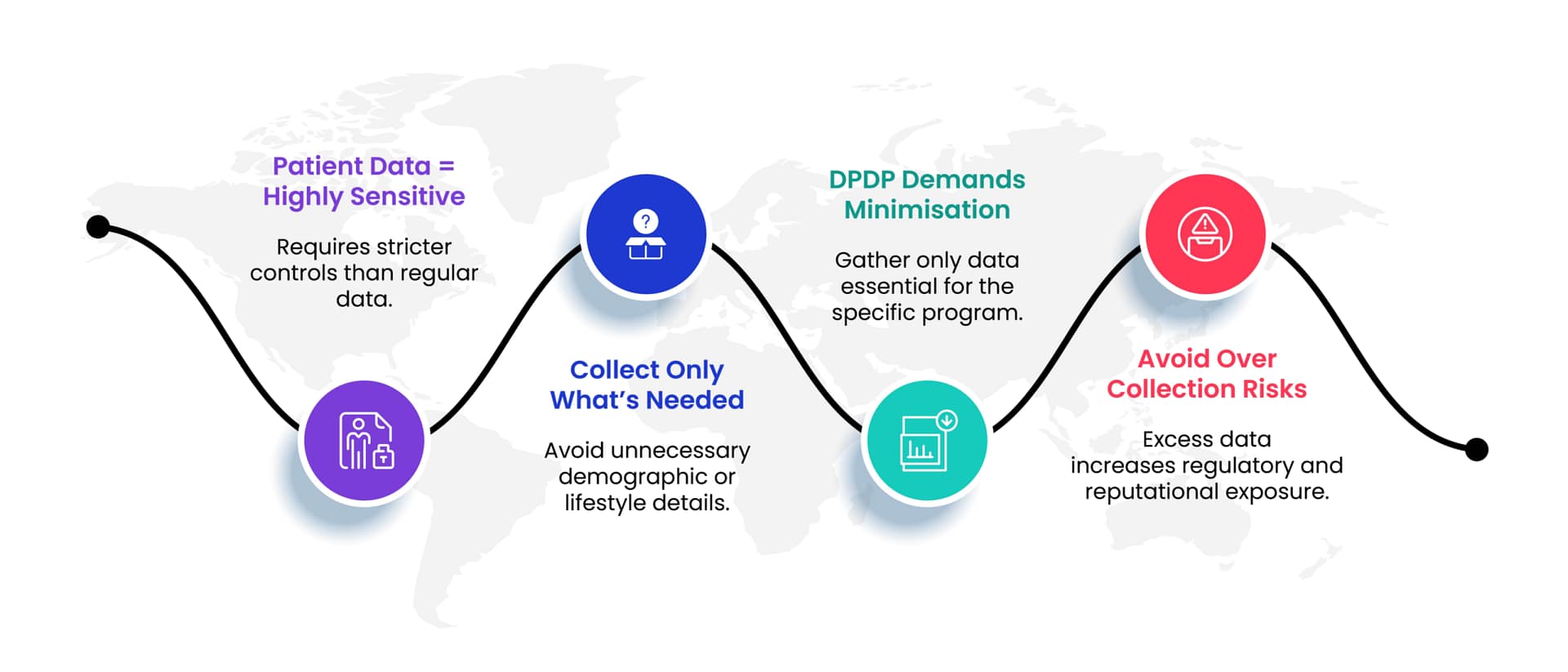
Patient Data Requires Even Stricter Minimisation


Patient data is inherently sensitive.

Pharma companies running patient support programs often collect more data than necessary. This may include demographic details, lifestyle information, or engagement metrics that are not directly required for program delivery.

Under DPDP, patient data minimisation is critical. Only data necessary for delivering the specific program should be collected.

Excessive patient data collection increases both regulatory and reputational risk.

Data Minimisation and Consent Alignment


Data minimisation is closely linked to consent.

Consent must clearly explain what data is being collected and why. Collecting data beyond what is described in consent violates DPDP.

Pharma companies must align data collection practices with consent language. If consent does not justify collecting certain data, that data should not be collected.

This alignment reduces ambiguity during audits.

Impact on Analytics and AI Systems


Analytics and AI systems often encourage broad data collection.

The assumption is that more data improves model accuracy. Under DPDP, this assumption must be balanced against minimisation requirements.

AI systems should be trained only on data that is necessary and lawfully collected. Collecting peripheral or speculative data increases risk without guaranteed benefit.

Data minimisation does not prevent AI adoption. It forces more disciplined design.

Legacy Databases Are the Biggest Risk


Most compliance issues do not originate from new data collection. They come from legacy databases.

Years of accumulated data often lack clear purpose mapping. Consent may not cover current use cases. Retention periods may be undefined.

Data minimisation requires reviewing legacy datasets and making difficult decisions about deletion, anonymisation, or restricted access.

Ignoring legacy data is not a safe option.

Retention Periods and Data Hoarding


Another area where pharma companies struggle is retention.

Data is often retained indefinitely because deletion feels risky or inconvenient. Under DPDP, indefinite retention without justification violates minimisation principles.

Retention periods should be defined by purpose. Once the purpose is fulfilled, data should be deleted or anonymised.

This applies to doctor engagement data, patient program records, and analytics logs.

Role of Systems in Enforcing Minimisation


Data minimisation cannot rely on policy alone.

Systems must support minimisation by design. This includes limiting mandatory fields, restricting enrichment, enforcing retention rules, and preventing unauthorised data collection.

CRMs and data platforms should be configured to discourage unnecessary data accumulation.

This is where DPDP-compliant HCP marketing frameworks add value by aligning data collection with execution needs.

Vendor and Third Party Data Minimisation


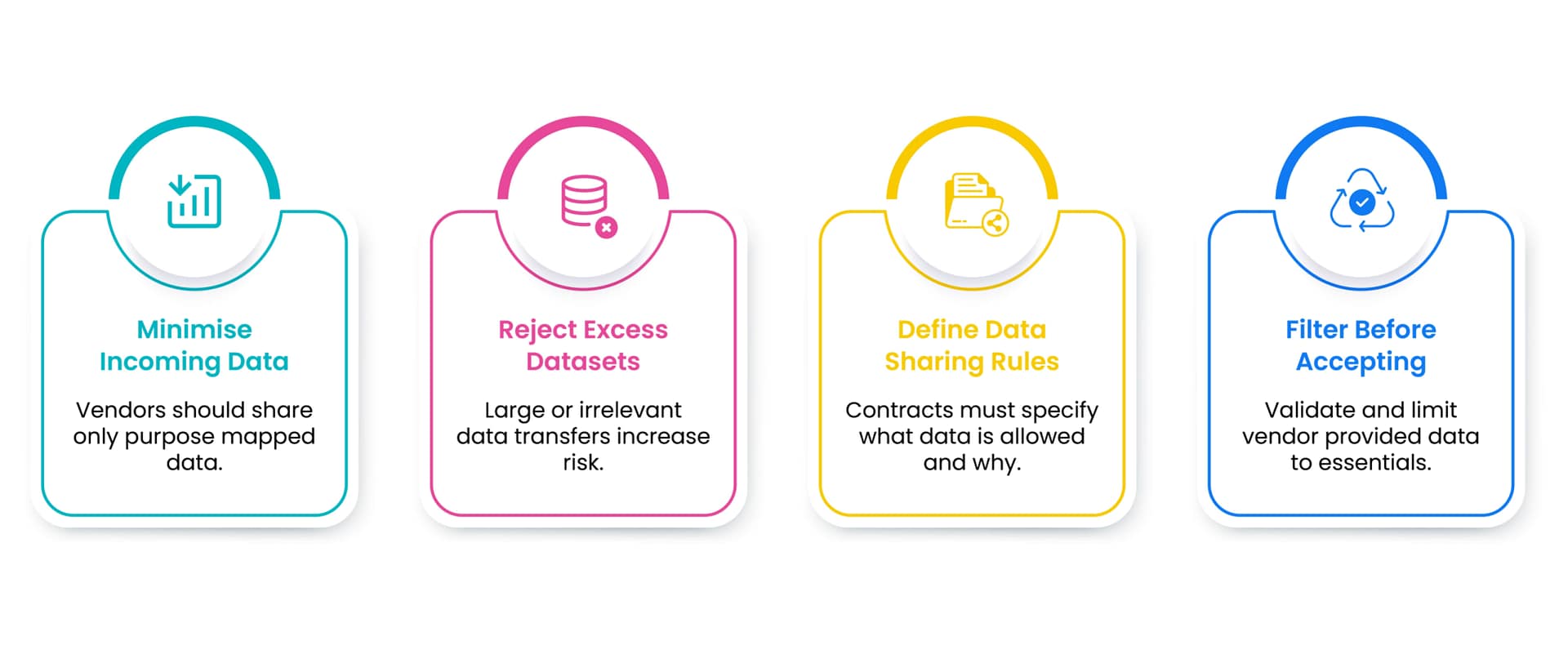
Pharma companies often receive data from vendors.

This data must also be minimised. Accepting large datasets without clear purpose mapping transfers risk to the pharma company as data fiduciary.

Vendor contracts should specify what data can be shared and why. Excess data should be rejected or filtered.

Data Minimisation During Campaign Design


Campaign design is an opportunity to enforce minimisation.

Teams should ask what data is necessary to deliver this campaign. If certain attributes are not required, they should not be accessed or exported.

This mindset reduces accidental misuse.

Auditing Data Minimisation Compliance


Auditors may ask why specific data fields exist.

Being able to explain the purpose of each category of data strengthens compliance posture. Data without justification becomes a liability.

Minimisation audits should be proactive, not reactive.

Overcoming Internal Resistance to Minimisation


Internal resistance is common.

Teams fear losing flexibility or future opportunity. Addressing this requires education. Minimisation does not eliminate innovation. It forces innovation to be intentional and compliant. Leadership support is essential to drive this cultural shift.

Data Minimisation as a Trust Signal


Doctors and patients are increasingly aware of data practices.

Collecting only necessary data signals respect and professionalism. This builds trust and reduces resistance to engagement.

In a regulated industry, trust is a competitive advantage.

Frequently Asked Questions on Data Minimisation Under DPDP

What is data minimisation under DPDP Act? retention?
It is the principle of collecting only data necessary for a defined purpose.
Does data minimisation apply to doctor data?
Yes. Doctor data must be limited to what is necessary for engagement.
Is excessive data collection a compliance risk?
Yes. Collecting unnecessary data increases DPDP exposure.
Does data minimisation apply to legacy databases?
Yes. Existing data must be reviewed and minimised.
How does minimisation affect AI systems?
AI systems must be trained on necessary and lawful data only.
Can pharma companies keep data indefinitely?
No. Retention must be justified by purpose.
Who is responsible for data minimisation?
The pharma company, as the data fiduciary.

Closing Perspective and CTA


Data minimisation under DPDP forces pharma companies to move away from data hoarding and toward purpose driven data practices.

This shift is not about reducing capability. It is about reducing risk while improving clarity and trust.

Pharma organisations that embrace minimisation will be better positioned to operate confidently under DPDP.

If you are evaluating how to implement DPDP-compliant HCP marketing with disciplined data minimisation, this page explains how compliant data practices are being operationalised in real pharma environments.